Technical supervisor inspecting a seamless conductive epoxy floor in an electronics production facility
ESD Flooring Singapore

ESD flooring systems for Singapore electronics facilities.

Rayson manufactures the StaticGuard CX90 conductive epoxy system in Singapore. From substrate assessment and grounding coordination to post-installation resistance verification, every layer creates one measurable path to earth.

Conductive epoxy systemGrounding layout coordinatedInstalled floor verified
The direct answer

ESD flooring is not a conductive coating. It is a controlled system.

It creates a controlled path for electrostatic charge through substrate preparation, primer, conductive layers, grounding points and a conductive wearing coat. Set the conductive or static-dissipative target from the facility ESD programme first, then verify the installed floor on site.

Read the StaticGuard CX90 technical data
Set the target first

Conductive or static-dissipative? Set the requirement first.

This is not a visual choice. The facility ESD programme, sensitive components, personnel contact, footwear and verification method decide the target; the floor system and earthing path follow.

01

Conductive flooring

For controlled areas whose specification calls for a lower resistance range. The published StaticGuard CX90 data reports average electrostatic behaviour of 10⁴–10⁶ Ω when installed and earthed correctly.

StaticGuard CX90 TDS (PDF)


02

Static-dissipative flooring

For areas whose specification calls for a higher resistance range. Confirm the target, test method and acceptance criteria with the facility ESD coordinator; do not assume every conductive coating is suitable.

Read the ESD standards guide
Specify by requirement

What does the floor need to protect?

Define the requirement around people, sensitive components or the electrical path before discussing a coating.

01 / People, footwear and floor contact

Every crossing of the floor is part of the system.

Across workstations, routes and transitions, people, footwear and flooring need to support the facility’s defined ESD-control requirement.

  • Walking routes
  • Footwear contact
  • Workstation transitions
See electronics facility systems
ESD-safe footwear moving across a seamless conductive floor in an electronics facility
System anatomy

A conductive floor is a circuit you walk on.

The target resistance range defines the system, grounding layout and verification method. Product selection follows that target.

Read the StaticGuard CX90 technical data
StaticGuard CX90Conductive layer + grounding pointsPrepared concrete substrate
  1. 01Prepare the substrateSound, clean concrete with moisture assessed
  2. 02Reinstate defectsUse PatchBond TX80 where repairs are required
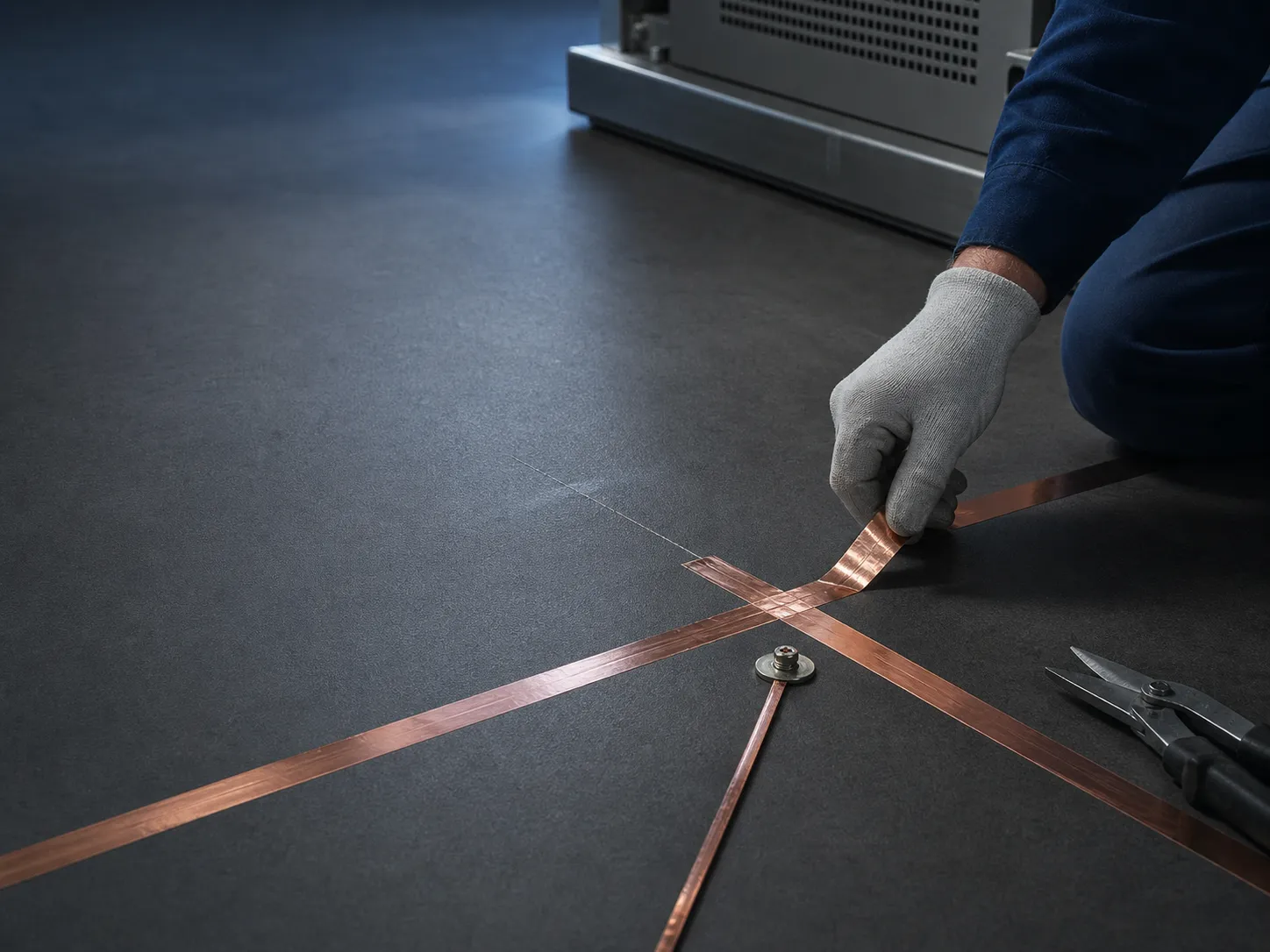
  3. 03Prime and groundSet the conductive layer, copper points and grounding layout
  4. 04Apply the conductive coatStaticGuard CX90 at the specified thickness
  5. 05Verify the installed floorMeasure and record against the project method

The system primer and grounding layout must be confirmed for the project by the Rayson technical team, facility engineer and relevant electrical personnel. Read the ESD flooring standards guide to understand how project requirements become site verification.

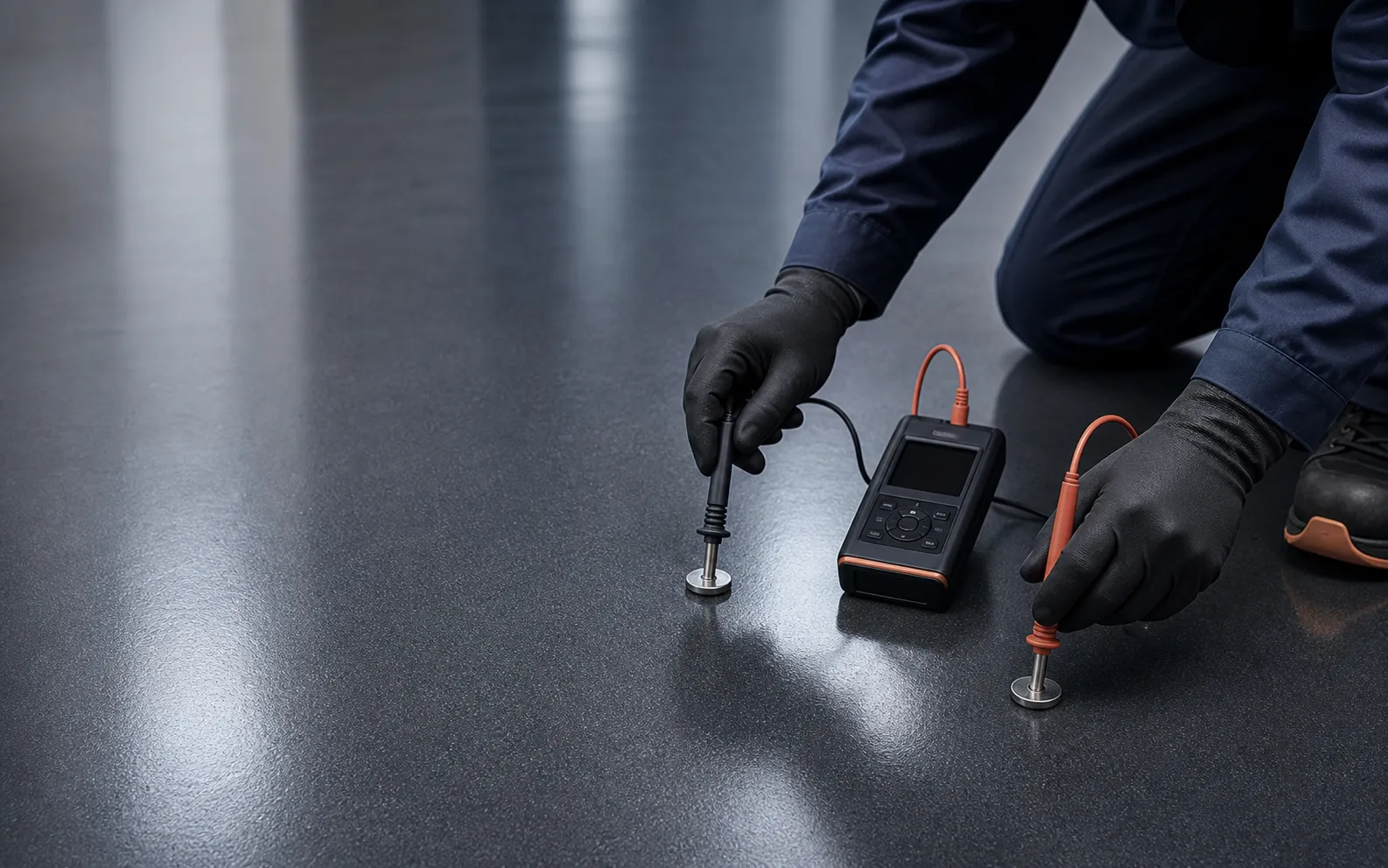
Technician verifying a completed conductive epoxy floor with a professional resistance meter
Handover evidence

If it is not measured, it is not verified.

The completed floor must be measured and documented using the method agreed for the project. The published TDS is the starting point; site verification is the handover evidence.

01

Agree

Confirm the target, test method and measurement positions.

02

Measure

Test the completed floor after the appropriate cure.

03

Document

Record the result for handover and future maintenance.

Read the StaticGuard CX90 technical data
A typical system route

From prepared slab to a verified conductive wearing surface.

03GroundConductive layer and copper points

Defined by the system and electrical coordination

05VerifySite measurement

Record against the project ESD target

For adjacent general-production zones, review LevelShield SL120 self-levelling epoxy. It should not automatically be treated as part of the ESD system.

Ready to define the project?

Send the ESD requirement before choosing the coating.

Send the floor plan, existing surface, target requirement and programme. Rayson will return an initial technical direction within one working day.

Frequently asked questions

What is ESD flooring?

ESD flooring is a conductive or static-dissipative floor system that gives static charge a controlled path to earth. The floor works as part of a complete ESD programme that includes the specified target, grounding arrangement, footwear and post-installation verification.

Does ESD flooring require grounding?

Yes. A conductive wearing coat alone does not establish a verified path to earth. The earthing layer, copper grounding points and connection to building earth must be agreed for the project with the relevant facility and electrical personnel.

What is the difference between conductive and static-dissipative flooring?

They are different electrical-performance classes. The correct class and target range come from the facility ESD programme or project specification. Select the target first, then design the complete flooring and grounding system around it.

How is an ESD floor verified after installation?

The completed floor is measured after the appropriate cure using the project-agreed method, including resistance-to-ground and/or point-to-point testing as required. Readings should be documented for handover and future maintenance.

Can an existing epoxy floor be upgraded to ESD?

The existing coating and substrate must first be assessed. A conductive system requires its own controlled build-up and grounding arrangement, so local appearance alone cannot confirm suitability. Send the current floor details and ESD target for review.

How should an ESD floor be maintained?

Use cleaning products that do not leave an insulating film. Waxes and some polymer polishes can change surface behaviour. Repair damage promptly and schedule retesting in line with the facility ESD programme.

What resistance does StaticGuard CX90 achieve?

The published Rayson StaticGuard CX90 data reports average electrostatic behaviour in the 10⁴–10⁶ ohm range when the system is installed and earthed correctly. Final acceptance must use the target and test method set by the facility ESD programme.

Does an ESD floor make a facility compliant with an ESD standard?

No. An ESD floor is one controlled element within the wider ESD programme. Footwear, personnel practices, equipment grounding, test method and documented results also need to meet the facility’s applicable requirements.

Not sure which system fits your project?

Tell us your surface, area and timeline — our Singapore technical team will recommend a practical system and price it fast.