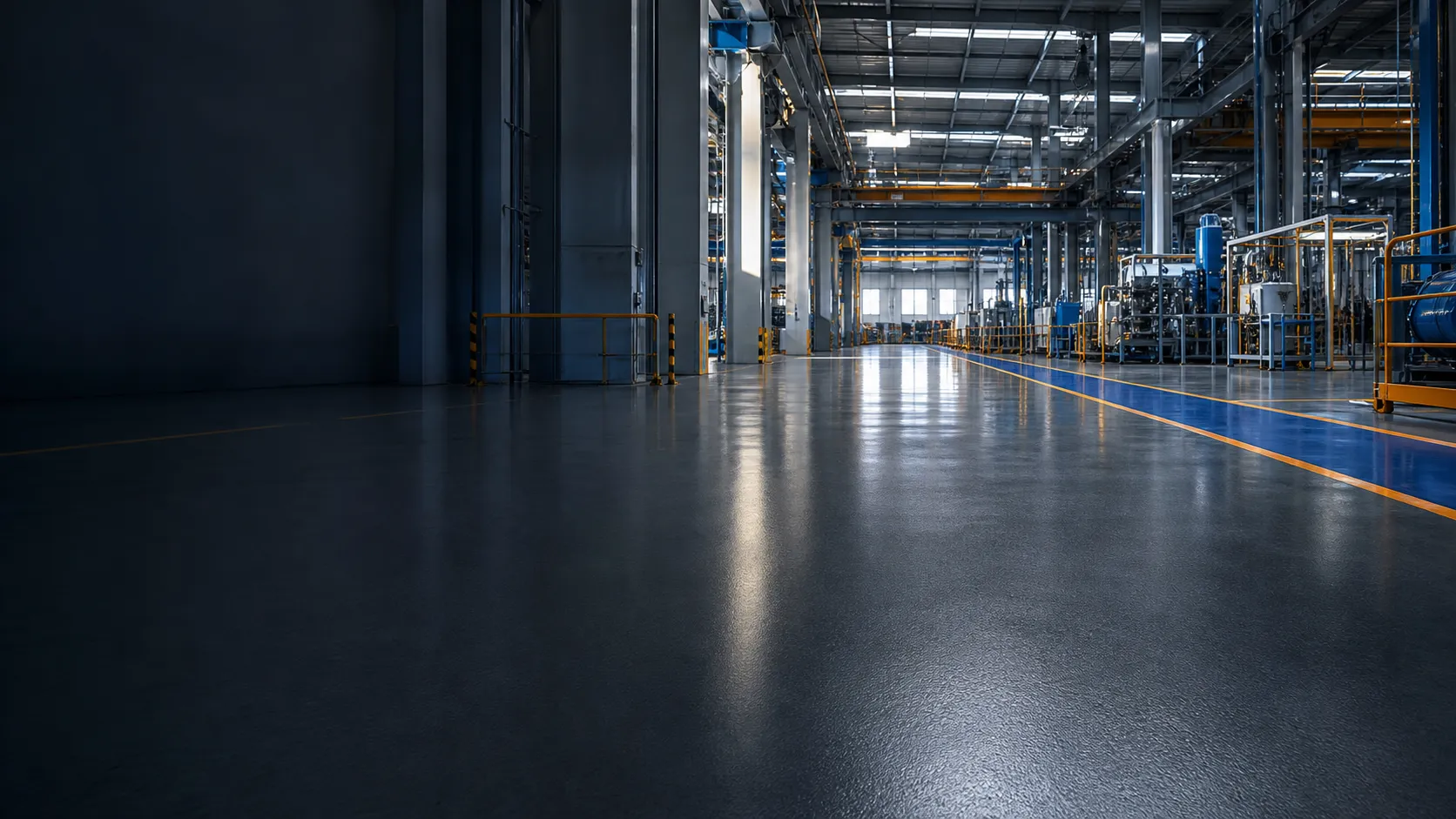
Factory floor coating in Singapore, engineered zone by zone.
Forklift aisles, wet-process areas, ESD-controlled rooms and storage corridors face different operating risks. Rayson defines each zone first, then builds the coating system around real production conditions.
The correct factory floor starts with the operating risk—not the product name.
Tyre turning, process liquids, heat and wash-down, ESD requirements, machine loads and the closure window decide the floor system together. One factory commonly needs two or more system directions—not one coating everywhere.
Choose the factory zone. See what the floor must solve.
The image, operating risk, preliminary system direction and enquiry brief change together.
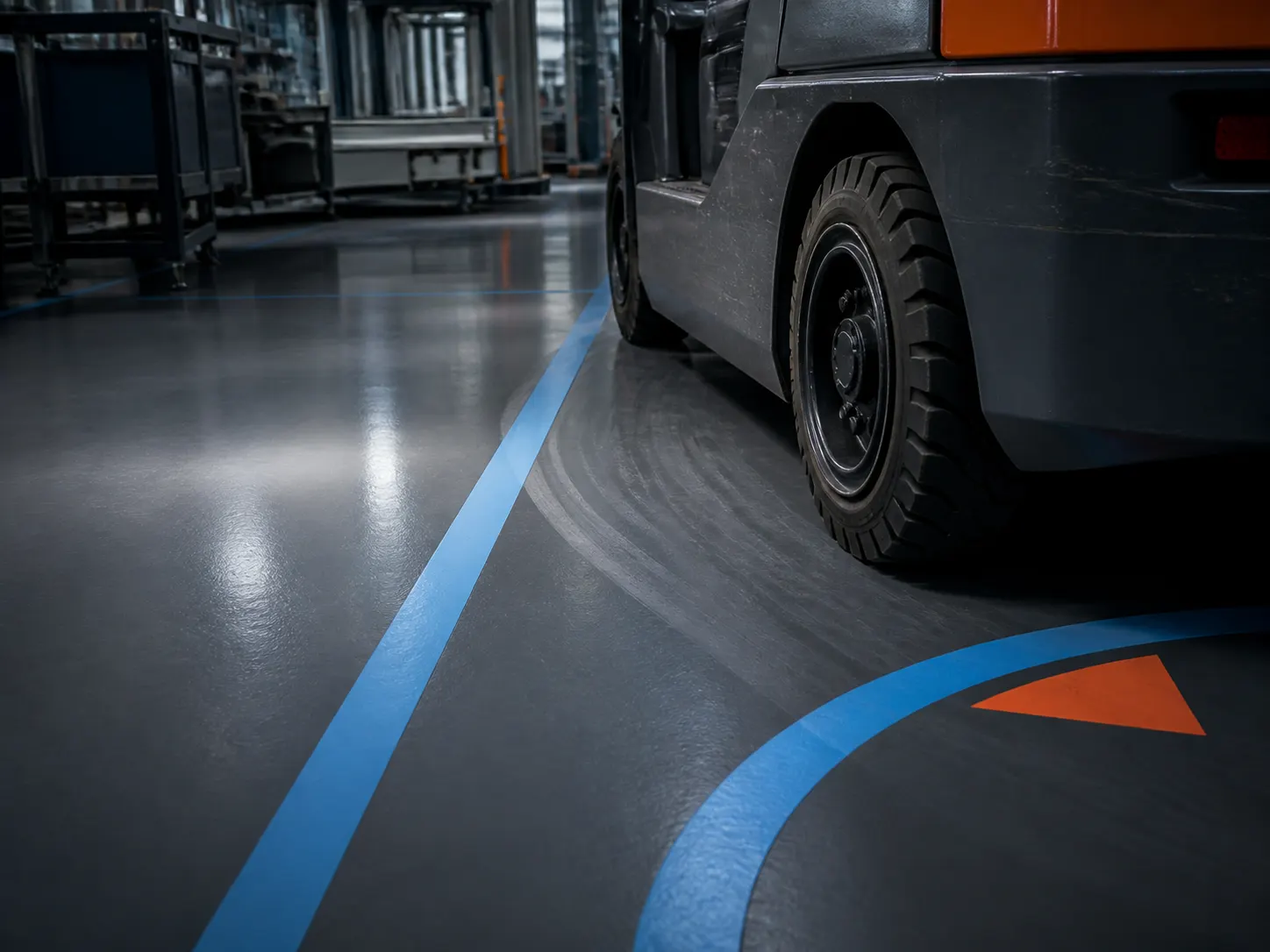
Where tyres brake and turn every day, the floor build needs dependable strength.
Forklift frequency, wheel type, turning radius, point loads and cleaning decide the wearing-course direction. LevelShield SL120 is the self-levelling epoxy route to evaluate further; confirm the final build against the substrate, traffic and TDS.
- Forklift frequency and wheel type
- Turning, braking and point loads
- Flatness, cleaning and demarcation
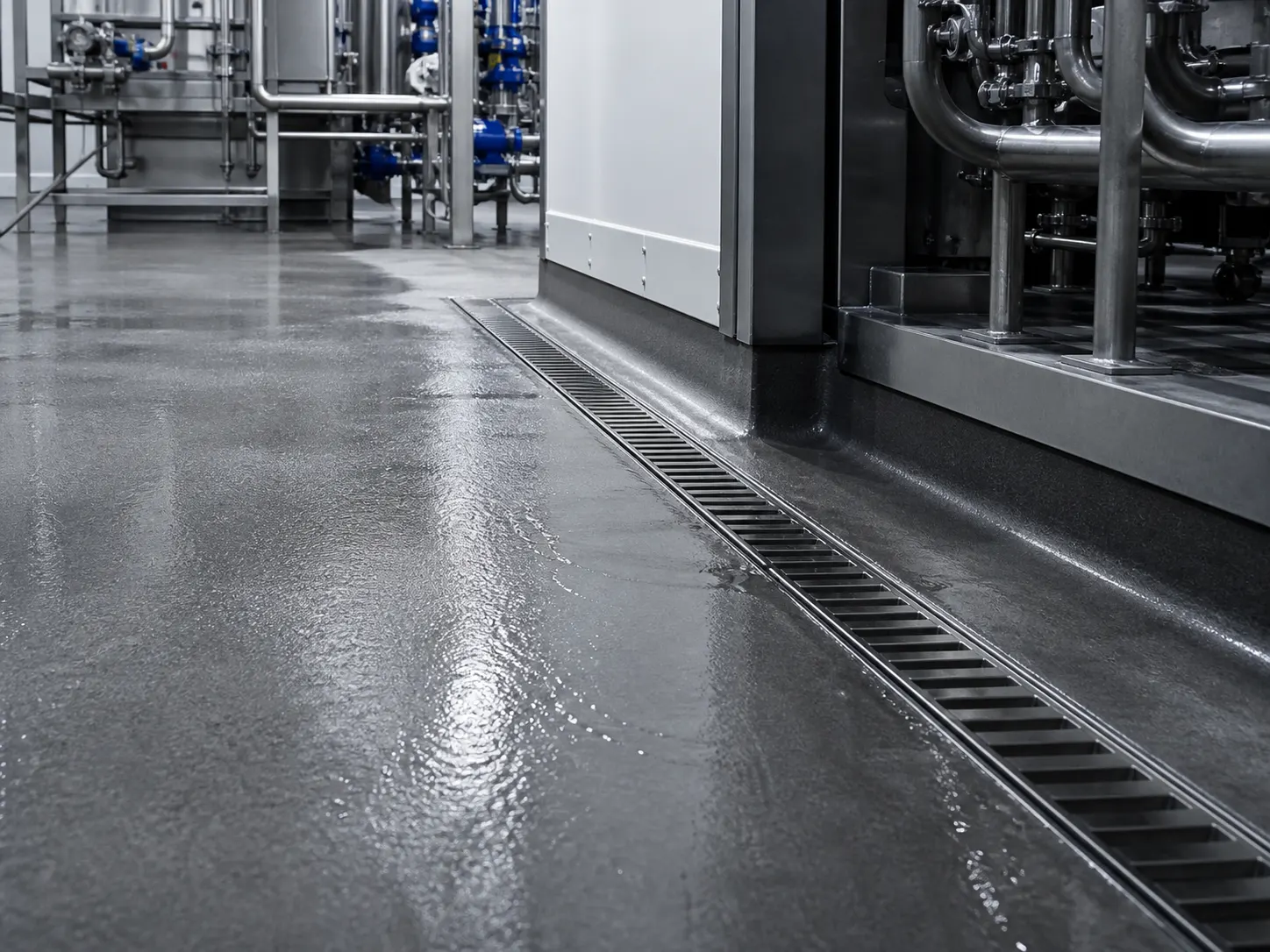
When cleaning is part of production, drainage and junctions are part of the floor.
Repeated wet service, process liquids, cleaning chemistry and heat exposure must be assessed together. PurScreed PC70 is the PU-cement direction to evaluate; confirm suitability, texture and detailing against the actual exposure and TDS.
- Wet service and cleaning routine
- Process liquids and heat exposure
- Drains, coving and plinths
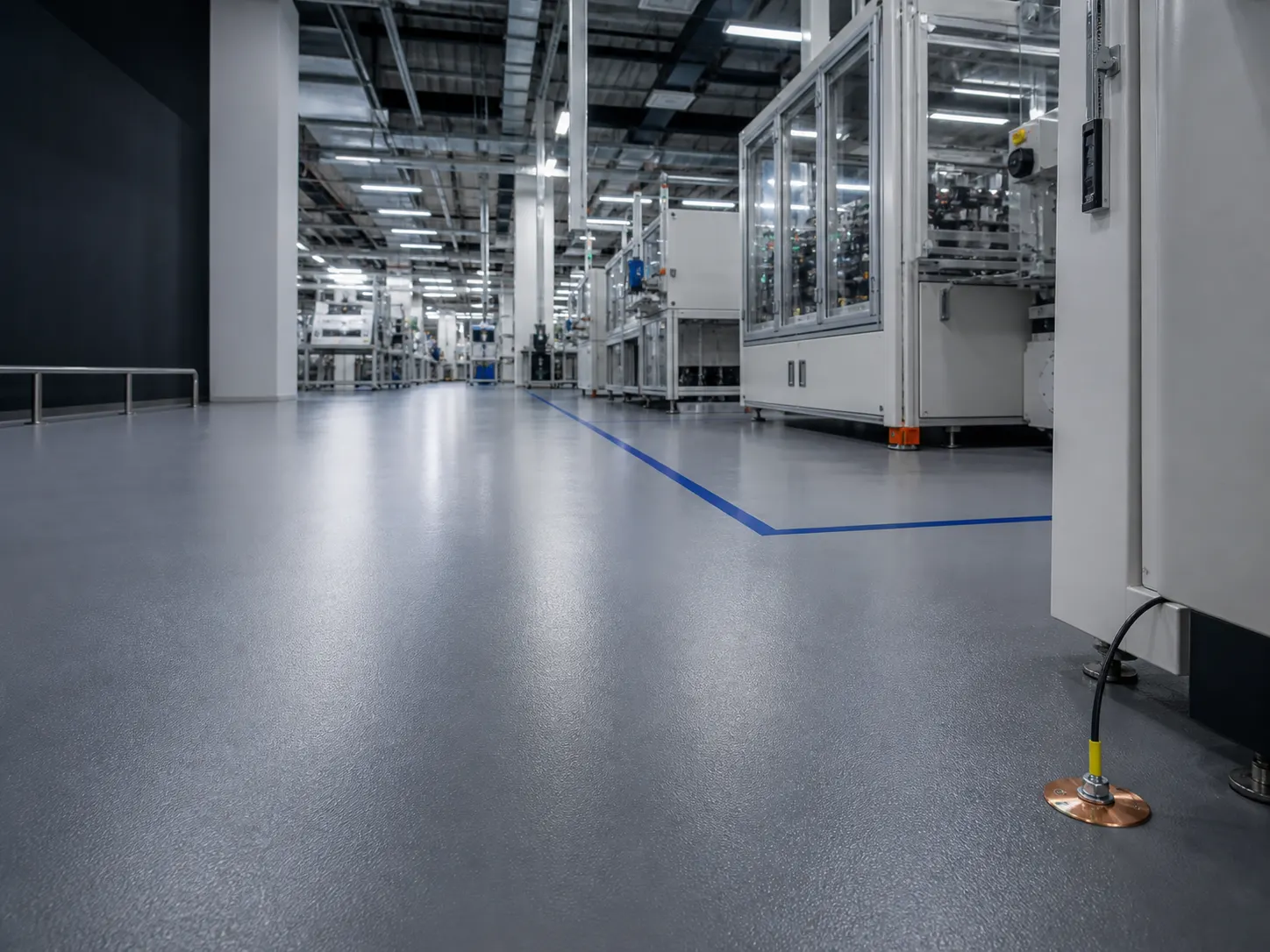
A conductive floor starts with the target resistance, earthing layout and test responsibility.
An ESD zone cannot be selected by colour or product name alone. StaticGuard CX90 is the conductive epoxy direction to assess; the project team must still confirm the target resistance range, earthing design, substrate and acceptance method.
- Target resistance range
- Earthing layout and connection points
- Testing and maintenance responsibility
Lighter duty still needs a maintainable surface that stays bonded and cleanable.
Stores, corridors and pedestrian routes do not always need the production line’s heavier build. Prepared concrete can be assessed for PrimeBond E20 and FloorGuard R50, subject to the real traffic and cleaning duty.
- Trolley and pedestrian traffic
- Dust control, cleaning and appearance
- Substrate condition and maintenance
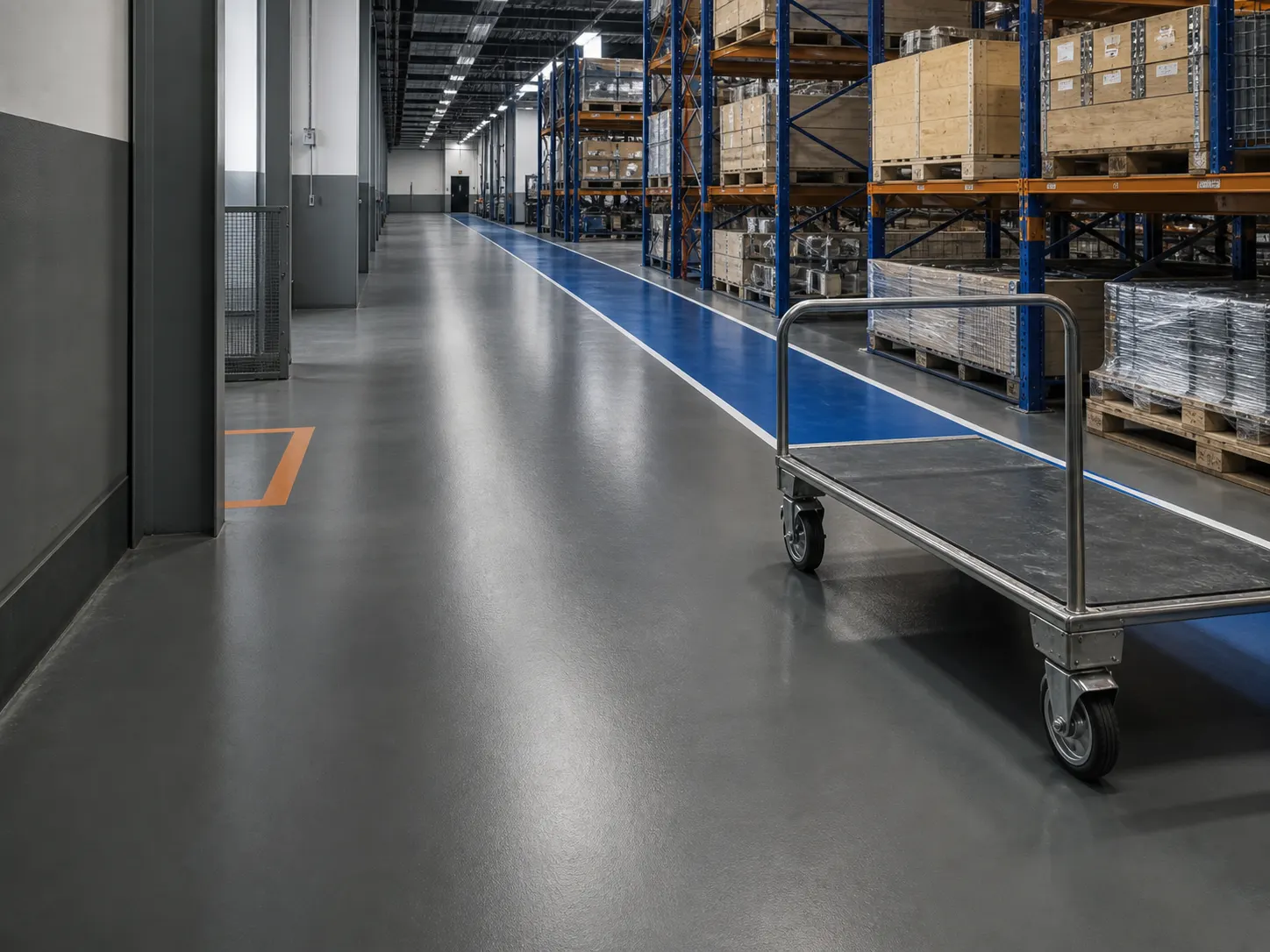
Find where the floor is being pushed first.
Tyre-turning shear
Braking and power steering drive a weaker build toward early failure.
Oil contamination
Concrete exposed to years of machine drips can undermine the bond of a new system.
Machine point loads
Feet, anchors and dropped loads need inspection and repair before coating.
Moisture and weak substrate
Rising moisture, laitance and hollow screed cannot be hidden below a new finish.
Four real duties. Four product routes you can inspect.
Confirm the final system, primer, thickness, details and return-to-service programme against the actual site and relevant TDS.
LevelShield SL120
Technical roleSELF-LEVELLING EPOXYPurScreed PC70
Technical rolePU-CEMENT SCREEDStaticGuard CX90
Technical roleCONDUCTIVE EPOXY FLOORINGPrimeBond E20 → FloorGuard R50
Technical roleEPOXY PRIMER + FINISH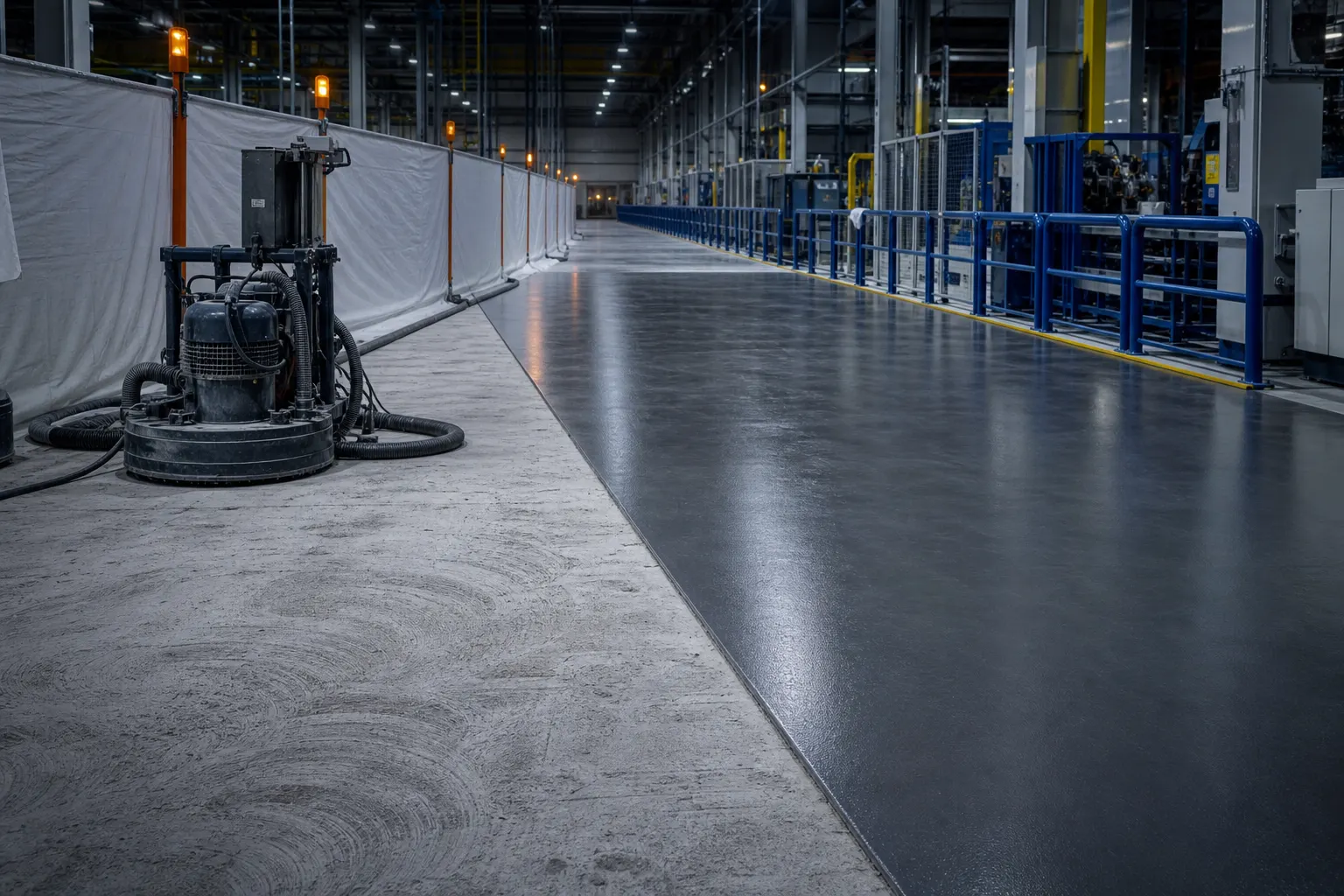
The floor system must fit the production calendar too.
Whole-line, half-zone or night-shift work changes isolation, preparation, coating sequence and the reopening plan. Tell us what can stop and when; the final programme still follows the selected product TDS and real site conditions.
- 01Define what can stop
- 02Isolate and prepare
- 03Install by zone
- 04Reopen from the TDS
Product, technical role and TDS—kept together.
Consultants, contractors, facilities teams and procurement can inspect the same public technical information.
LevelShield SL120
PurScreed PC70
StaticGuard CX90
PrimeBond E20 → FloorGuard R50
Send the zone plan—not a finished specification.
Your first message only needs these operating facts. Rayson can then begin a useful system discussion.
- 01Areas for production, process, ESD, stores and routes
- 02Vehicle types, wheel types, frequency and turning locations
- 03Process liquids, heat, wash-down and cleaning routine
- 04Existing floor, failure photos and shutdown window
Plan your project
Product Selector
Answer four questions about your surface and conditions to shortlist suitable Rayson systems.
Find your systemCoverage Calculator
Estimate material quantities from your floor area, coats and coverage rate.
Estimate quantitiesTDS Library
Open technical data sheets for every Rayson product — no forms, no gating.
Open the libraryFrequently asked questions
What is the best floor coating for a factory in Singapore?
The right choice depends on the duty in each zone. Forklift production aisles, hot or wet process areas, ESD-controlled rooms and stores place different demands on a floor. Rayson therefore assesses traffic, liquids, temperature, static-control requirements, the substrate and the available shutdown window before recommending a system direction.
Should a factory use epoxy or PU-cement flooring?
Epoxy and PU-cement serve different operating conditions. A self-levelling epoxy direction can be assessed for suitable production and traffic areas. A PU-cement screed direction should be assessed where heat, frequent wash-down or demanding process exposure is relevant. The final build must be checked against the site conditions and the applicable product TDS.
What flooring should be considered for forklift aisles and turning zones?
The assessment should cover wheel type, load, traffic frequency, braking, turning and impact—not traffic alone. Prepared substrate condition and the required texture also matter. LevelShield SL120 is a Rayson self-levelling epoxy direction that can be evaluated for suitable production zones after those conditions are defined.
How is an ESD factory floor specified?
Define the required resistance range, earthing layout, testing responsibility, traffic and maintenance method before choosing the system. Rayson StaticGuard CX90 is the conductive epoxy direction to evaluate; its published TDS should be read together with the project-specific ESD design and verification requirements.
Can factory floor coating be installed in phases while the plant operates?
A phased programme may be possible when work zones, access, isolation, preparation, ventilation and reopening are planned around production. The sequence must use the selected products’ published recoat and return-to-service information rather than a generic promise.
Can factory floor coating be applied over oil-contaminated concrete?
Oil contamination must be investigated before coating. Grinding alone may not remove contamination that has penetrated the slab. The affected depth, adhesion and moisture condition should be assessed, and unsound or contaminated material addressed before a system is selected.
How are machine plinths, joints and damaged concrete handled?
Machine bases, penetrations, edges and joints need their own detail. Broken or weak concrete must be repaired, and movement joints must remain compatible with the intended movement. These details should be resolved before coating so the finish does not simply conceal an active defect.
Why do factory floor coatings fail early?
Common causes include weak or contaminated concrete, moisture, inadequate mechanical preparation, incompatible layers, poor joint detailing, the wrong system for wheel or process exposure, and reopening before the selected system has reached its required cure.
What information does Rayson need to review a factory floor?
Send a zone plan with approximate areas, vehicle and wheel information, process liquids and cleaning routine, heat or wash-down exposure, ESD requirements where relevant, existing-floor photographs, visible failures and the available shutdown or phasing window.
Not sure which system fits your project?
Tell us your surface, area and timeline — our Singapore technical team will recommend a practical system and price it fast.