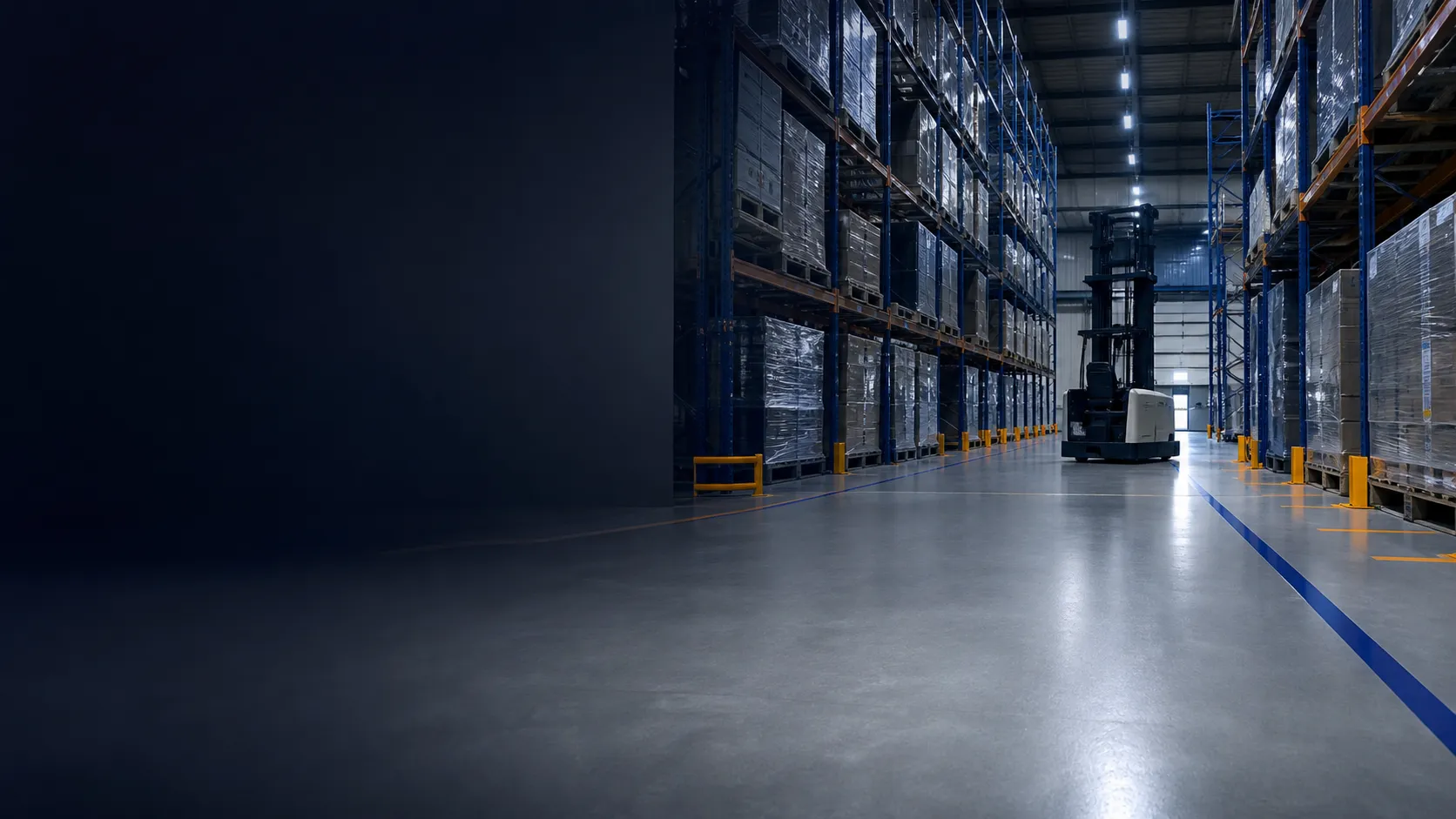
Warehouse floor coating starts with the traffic route.
Straight aisles, turning zones, loading thresholds and picking routes do not load a floor in the same way. Rayson starts with the vehicles, traffic and substrate, then discusses a system direction you can verify.
Start with how vehicles move—not the floor area.
Wheel material, load, passes per shift, turning and braking, joints and thresholds, the existing substrate and the work window decide a warehouse floor together. One warehouse commonly needs zone-specific details and wearing-course directions—not one identical build everywhere.
Choose the traffic zone. See what the floor must resist.
The image, risk, preliminary product direction and enquiry brief change together.
Repeated straight-line traffic needs a stable, seamless and cleanable wearing route.
Start with vehicle and wheel type, load and passes per shift. LevelShield SL120 is the self-levelling epoxy direction to assess further; confirm primer, thickness and final build against the substrate and relevant TDS.
- Vehicle, wheel and maximum load
- Passes per shift and tracked grit
- Flatness, cleaning and demarcation
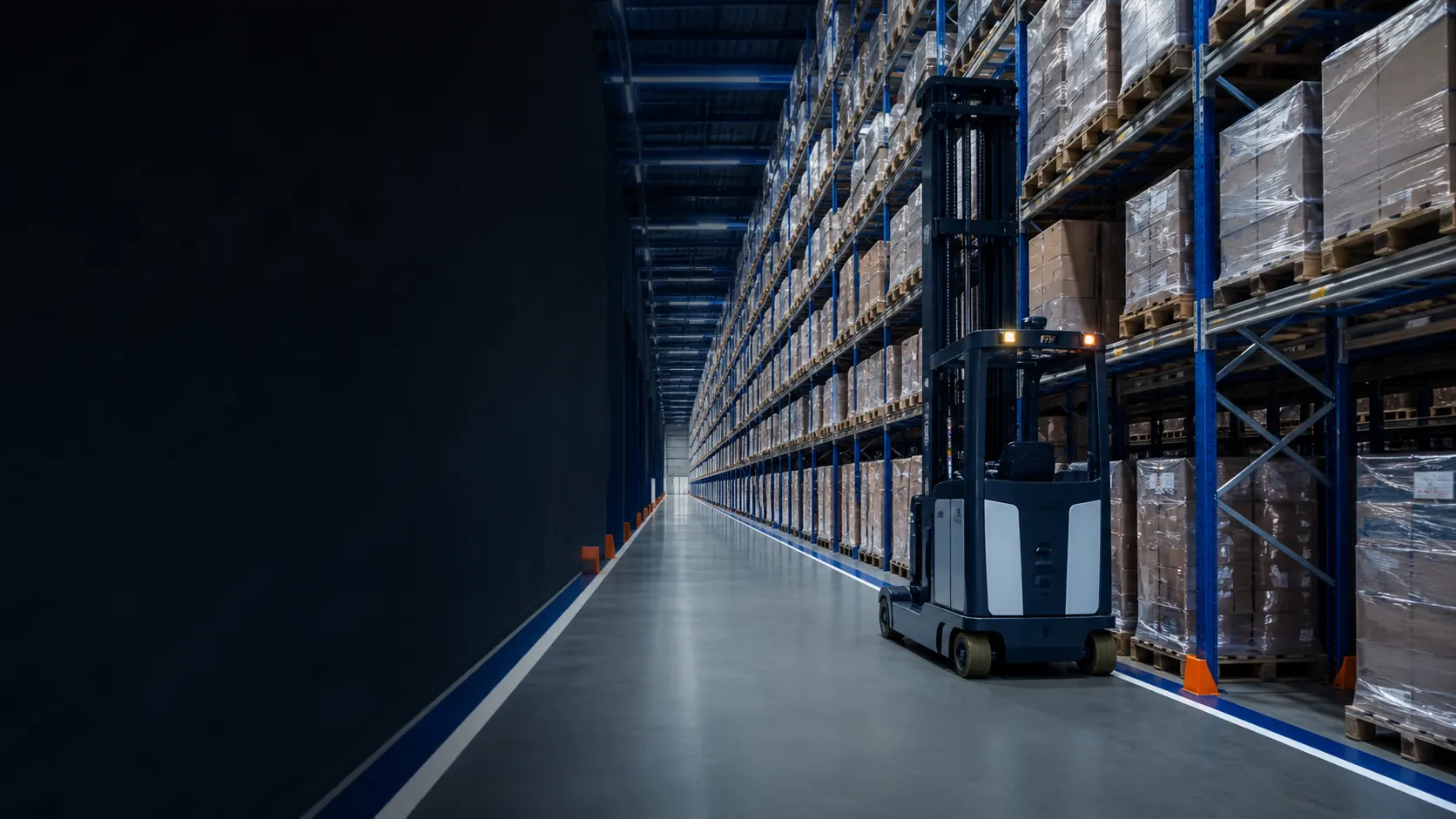
Where vehicles pivot repeatedly, the floor carries more than vertical load.
Turning radius, power steering, braking and tyre material increase local shear. Map cross-aisles and turning points before assessing the LevelShield SL120 direction and any substrate repair or local detailing needed.
- Turning radius and power steering
- Braking points and loaded frequency
- Local wear and existing delamination
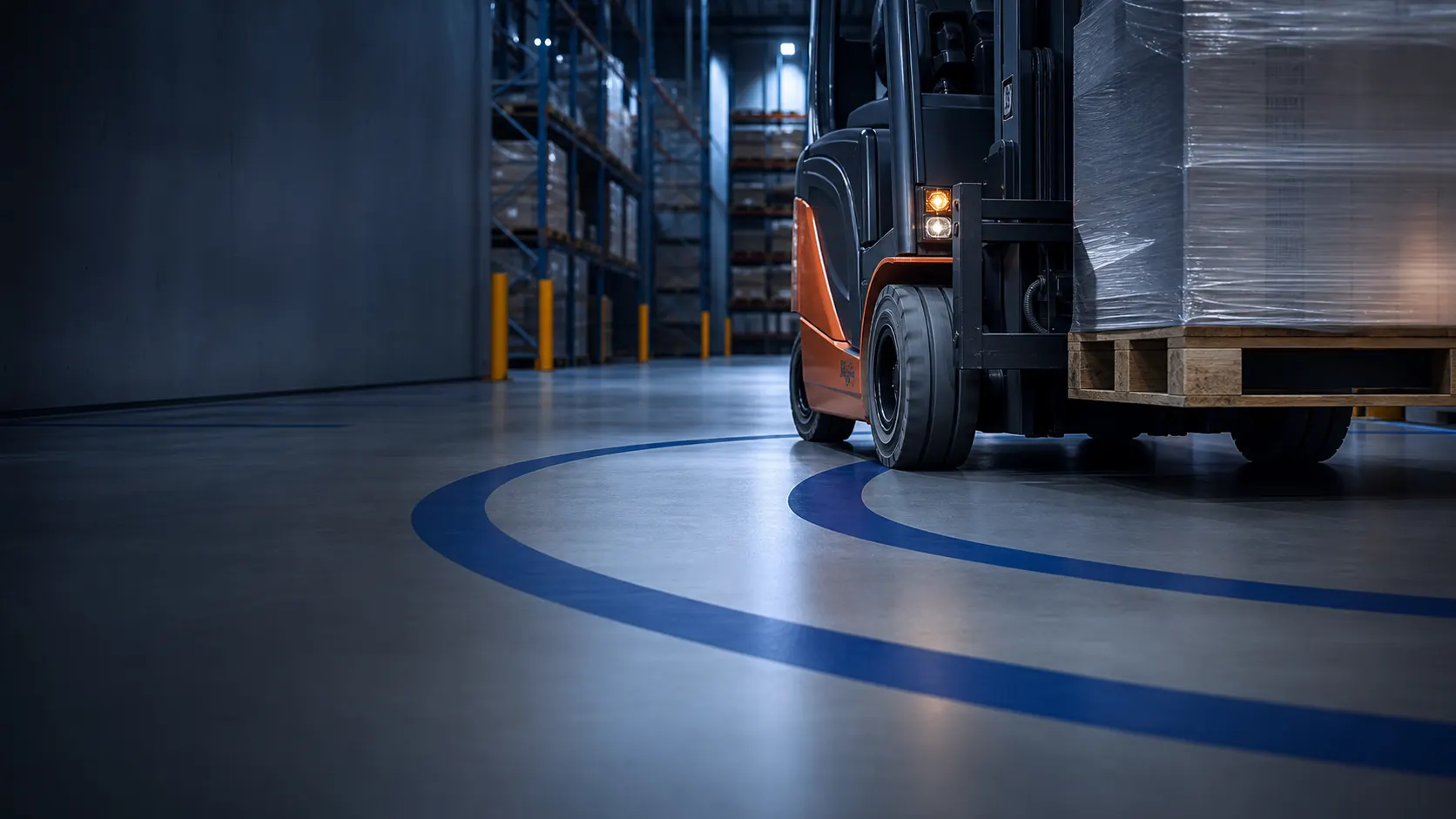
At the dock threshold, inspect the joint and repair before choosing the finish.
Steel levellers, concrete thresholds, broken joint edges and wheel impact need separate inspection. MortarBond EM90 is assessed for horizontal reinstatement; PatchBond TX80 for applicable non-sag and bonding details. Confirm the wearing route after repair.
- Leveller-to-concrete interface
- Broken joints, spalls and potholes
- Wheel impact and oil contamination
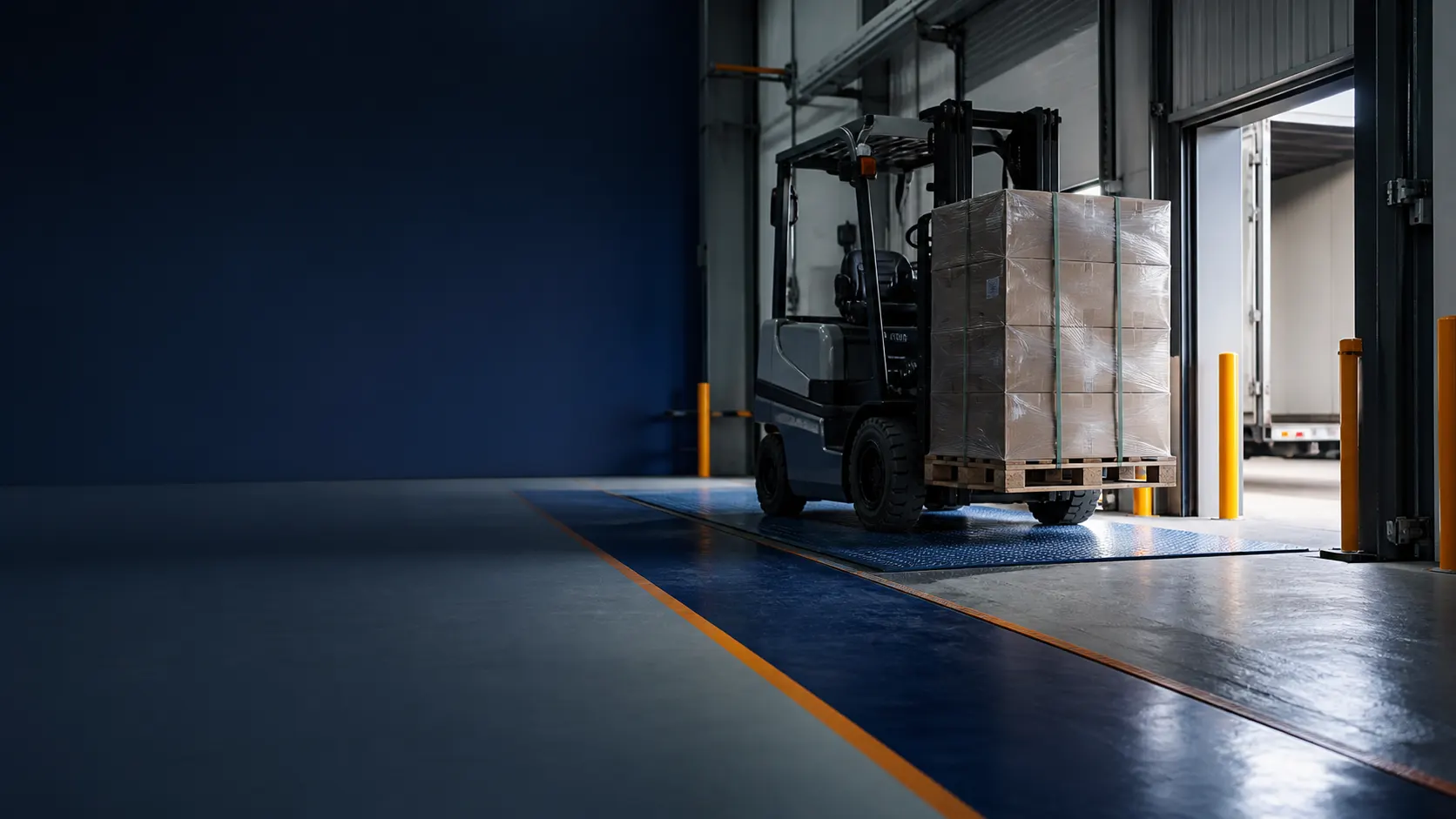
Lighter traffic still needs a cleanable, maintainable surface that stays bonded.
Picking areas, pedestrian lanes and lighter pallet-truck routes do not always need the main aisle’s build. Prepared concrete can be assessed for FloorGuard R50; confirm primer and final system against the substrate, traffic and TDS.
- Pallet-truck and foot traffic
- Dust control, cleaning and appearance
- Demarcation and maintenance plan
Four facts define what the floor actually carries.
Wheel and load
Hard wheels concentrate force through a smaller contact area.
Pass frequency
Repeated runs through the same aisle accumulate wear.
Turning and braking
Lateral shear concentrates at cross-aisles and picking ends.
Joints and thresholds
Impact points and broken edges must be resolved before coating.
Keep the product role and published TDS together.
These are preliminary directions, not a fixed specification detached from site conditions. Confirm primer, thickness, texture, repair and reopening against the actual substrate and relevant TDS.
PrimeBond E20
Technical roleEPOXY PRIMERLevelShield SL120
Technical roleSELF-LEVELLING EPOXYFloorGuard R50
Technical roleROLLER-APPLIED EPOXYMortarBond EM90
Technical roleHORIZONTAL FLOOR REPAIRPatchBond TX80
Technical roleNON-SAG + BONDING REPAIRA warehouse can be phased by route—not promised to stay live by default.
Aisle, bay or dock-by-dock work changes isolation, substrate preparation, vehicle diversion, coating sequence and reopening. Plan them together, then confirm the programme against the selected product TDS and real site conditions.
- 01Map routes that must remain open
- 02Isolate and prepare
- 03Install by zone
- 04Reopen from the TDS
Clients, consultants and contractors can inspect the same facts.
Every product name is paired with its product page and direct PDF technical data sheet—never an anonymous document button.
PrimeBond E20
LevelShield SL120
FloorGuard R50
MortarBond EM90
PatchBond TX80
Send the traffic route—not a finished specification.
Your first message only needs these operating facts. Rayson can then begin a useful system discussion.
- 01Warehouse plan and approximate area by zone
- 02Vehicles, wheel types, maximum loads and passes per shift
- 03Turning, braking, joints, thresholds and failure photos
- 04Existing coating, contamination and shutdown window
Plan your project
Product Selector
Answer four questions about your surface and conditions to shortlist suitable Rayson systems.
Find your systemCoverage Calculator
Estimate material quantities from your floor area, coats and coverage rate.
Estimate quantitiesTDS Library
Open technical data sheets for every Rayson product — no forms, no gating.
Open the libraryFrequently asked questions
What is the best warehouse floor coating for forklift traffic in Singapore?
There is no single answer for every warehouse. Vehicle and wheel type, maximum load, passes per shift, turning and braking, joints, substrate condition and the available work window all matter. LevelShield SL120 is the Rayson self-levelling epoxy direction to assess for suitable forklift routes; the final build must be confirmed against the site and relevant TDS.
Why do forklift turning zones need separate assessment?
A loaded vehicle turning or power-steering applies lateral shear as well as vertical load. Cross-aisles, aisle ends and braking points can therefore wear differently from straight routes. Map these locations and inspect existing distress before selecting the coating and repair details.
Is self-levelling epoxy or roller-applied epoxy better for a warehouse?
They serve different duties. A self-levelling epoxy direction can be assessed for suitable main traffic routes requiring a seamless, self-smoothed wearing surface. Roller-applied FloorGuard R50 can be assessed for appropriate storage, picking and lighter operational areas. The substrate and actual traffic decide the route.
How should damaged joints and loading-dock thresholds be repaired?
The repair depends on the defect geometry and duty. MortarBond EM90 is intended for horizontal spalls, potholes and damaged joint edges. PatchBond TX80 is intended for applicable non-sag, vertical, overhead and bonding repairs. Movement joints require a detail compatible with the intended movement; they should not simply be filled rigidly.
Can warehouse floor coating be installed while operations continue?
Phased work may be possible when access, vehicle diversion, isolation, preparation, coating sequence and reopening are planned route by route. It should not be promised by default. Recoat and return-to-service decisions must follow the selected products’ TDS and actual site conditions.
Can a warehouse coating be applied over an existing epoxy floor?
Only after the existing coating is assessed for adhesion, contamination, moisture, damage and compatibility. Sound coating may be mechanically abraded and trialled; weak, delaminated or contaminated material must be removed or otherwise resolved before a new system is specified.
What causes warehouse floor coatings to fail early?
Common causes include weak or contaminated concrete, moisture, inadequate mechanical preparation, broken joints, incompatible layers, the wrong system for the wheel and traffic duty, and reopening before the selected system has reached the required cure.
How should line marking and anti-slip texture be specified?
Demarcation and texture should be selected as part of the floor system and by zone. Turning areas, loading thresholds, pedestrian crossings and clean storage routes can need different balances of grip, cleanability and rolling resistance. Confirm the compatible build and application sequence for the selected products.
What information does Rayson need to review a warehouse floor?
Send the warehouse plan and approximate area by zone; vehicle and wheel types; maximum loads and passes per shift; turning, braking, joints and thresholds; the existing floor and visible failures; contamination or moisture concerns; photographs and the shutdown window.
Not sure which system fits your project?
Tell us your surface, area and timeline — our Singapore technical team will recommend a practical system and price it fast.