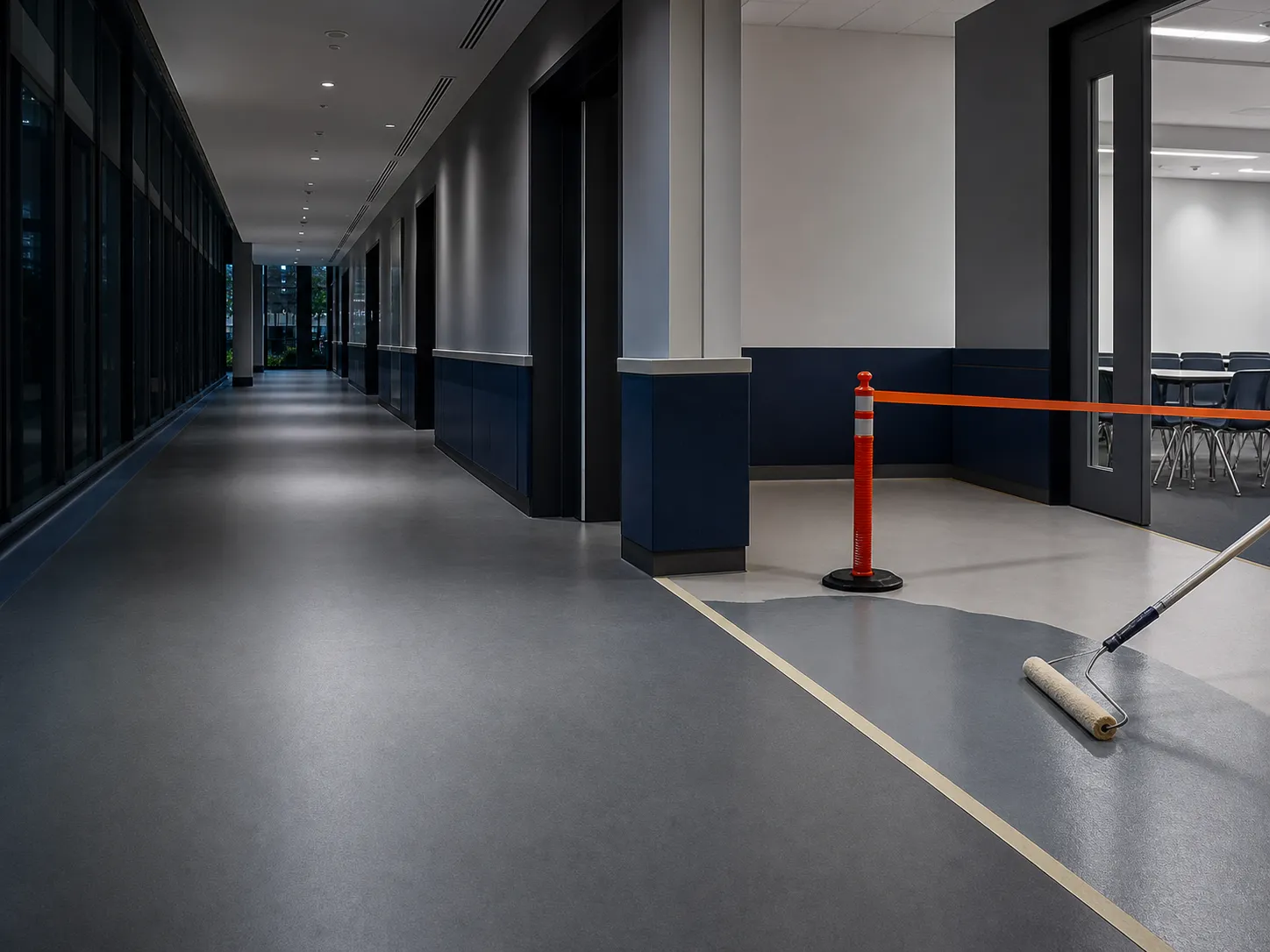
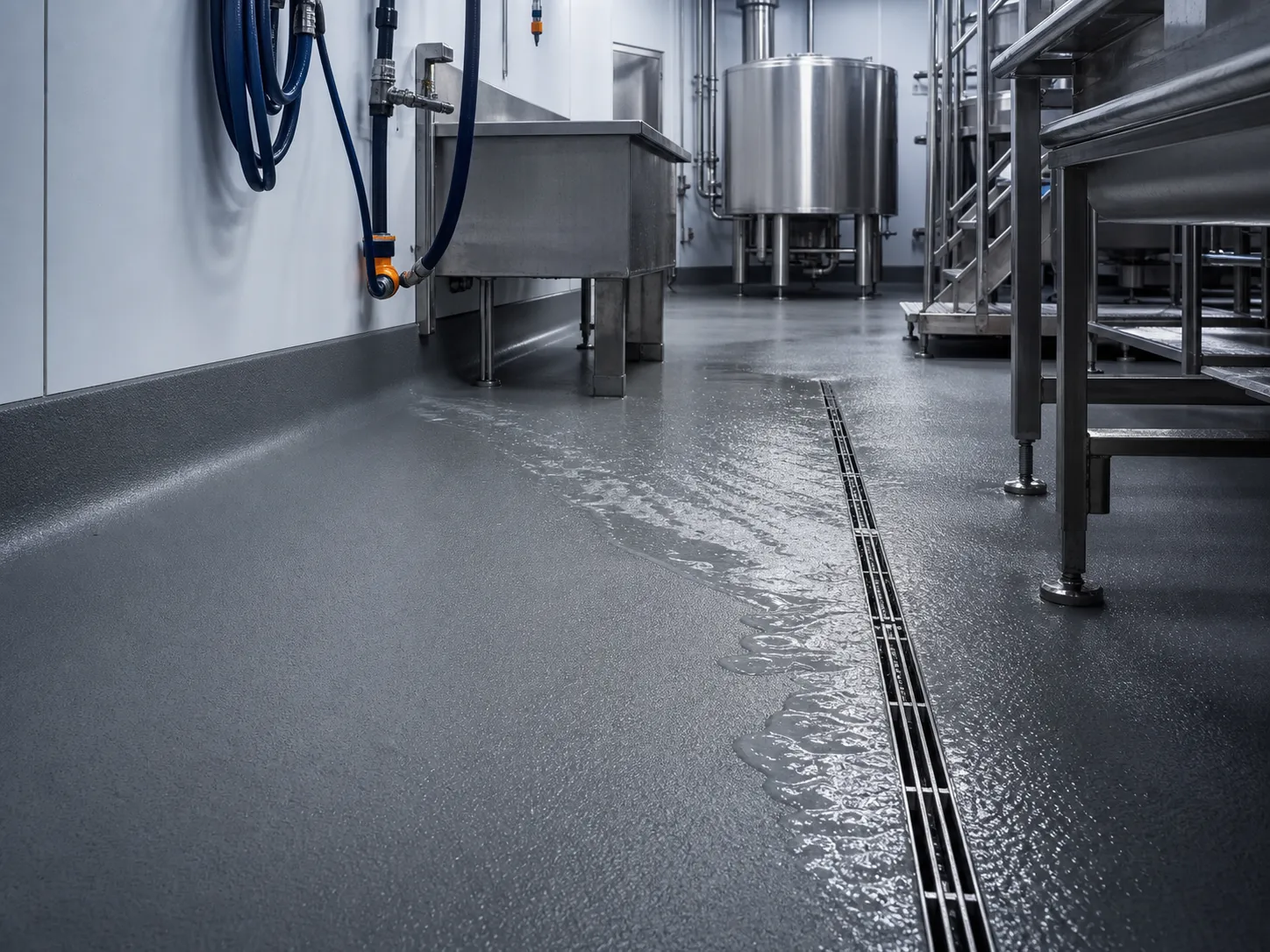
Industrial food-production facility showing a substantial PU-cement wet-process floor beside a refined polyurethane-coated dry aisle
PU Flooring Singapore

Two materials. Two jobs. One correct decision.

A polyurethane finish coating and a PU-cement screed are not interchangeable. Start with what the floor must survive.

UV & colourHeat & wash-downTraffic & chemistry
The short answer

Do not buy “PU flooring” until the system role is clear.

Choose a PU coating when the finish must manage appearance, abrasion or UV exposure. Review a PU-cement screed when the floor itself must carry wet processing, heavier traffic and demanding cleaning or chemical conditions.

Choose the material class

Same initials. Completely different work.

This distinction prevents a finish coating from being specified where a heavier floor build is required.

01 / PU COATING

The protective finish

Thin-film polyurethane used as the wearing finish in a compatible coating system.

Decides
UV exposure, colour, abrasion, odour and ventilation
Typical areas
Exposed decks, corridors, retail, education and epoxy systems
Rayson family
UraForce
Select a coating route
02 / PU-CEMENT SCREED

The working floor

Polyurethane-cement screed selected as a more substantial floor build for demanding service.

Decides
Wet process, chemical duty, traffic, cleaning and junction detail
Typical areas
Food production, commercial kitchens and chemical processing
Rayson product
PurScreed PC70
Explore PU screed flooring
Specify by exposure

What will the floor face every working day?

Choose the operating condition. The page will carry that context into your enquiry.

01 / UV EXPOSURE

Protect colour where tropical sun reaches the floor.

Start with an aliphatic UraForce finish, then resolve drainage, traffic, texture and the compatible build beneath it.

  • UV and weather
  • Tyre or foot traffic
  • Drainage and texture
See exposed deck systems
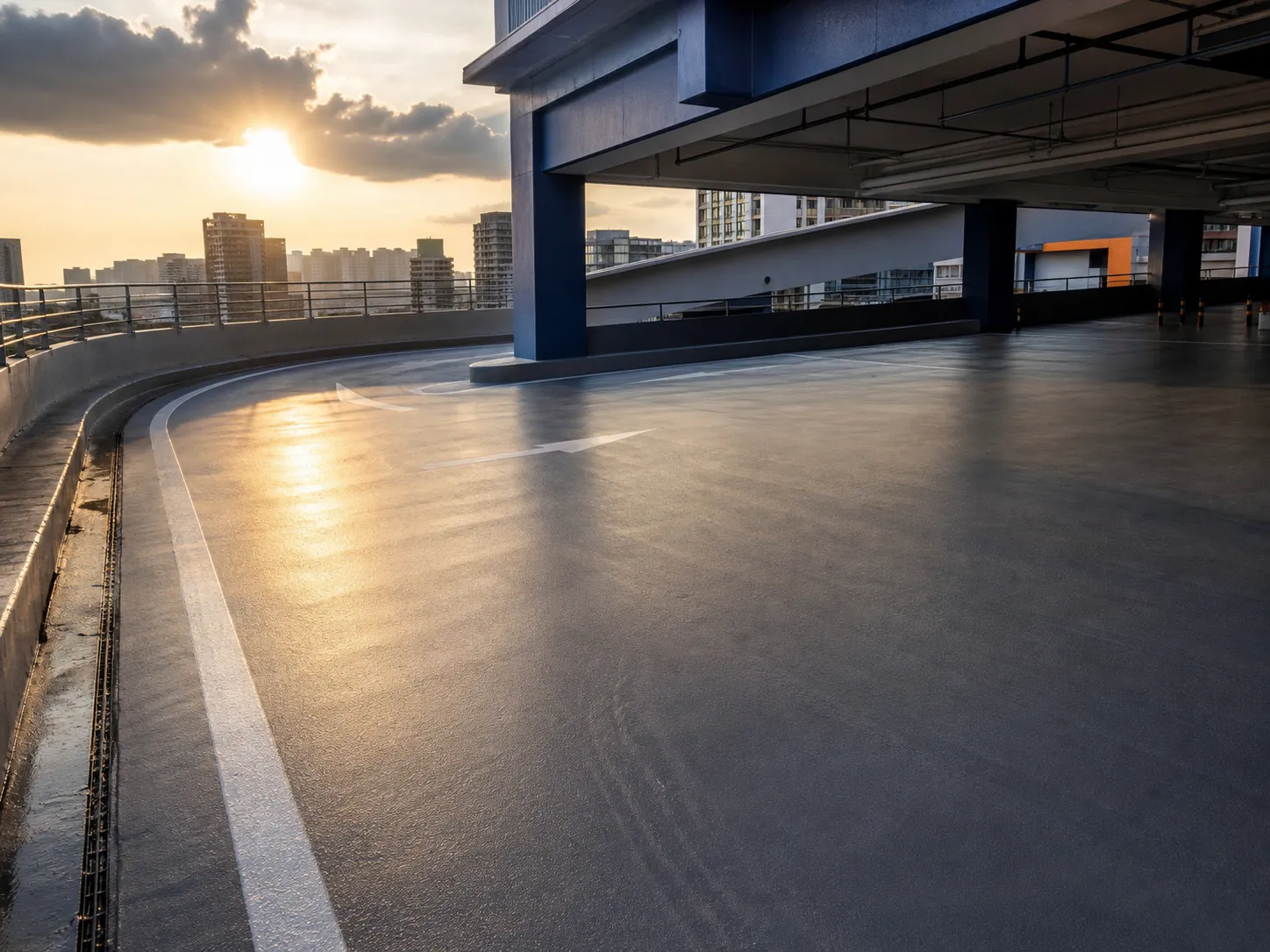
Sunlit upper car-park deck with a continuous polyurethane-coated traffic surface and drainage edge
System logic

The finish is only as credible as the layers beneath it.

These are system routes, not universal specifications. The substrate and exposure decide the final build-up.

PU COATING ROUTE

Prepared substrate → primer → body coat where required → UraForce finish

The PU layer protects a compatible prepared system beneath it. Review preparation and intercoat requirements before programming.

See the epoxy build beneath
PU-CEMENT ROUTE

Prepared concrete → specified primer or preparation route → PurScreed PC70 → detailed junctions

Wet-process performance also depends on coves, drains, falls, joints and the condition of the concrete—not the field area alone.

Review the screed decision
Published product evidence

Choose the role. Open the actual data sheet.

Product pages explain the role; PDF technical data sheets carry the published application and performance information.

Water-based finishes

Solvent-based and hybrid finishes

Heavy-duty floor and primer

Confirm the complete system, preparation, compatibility and return-to-service programme against every selected TDS before work begins.

Cost and programme

Area is only one line in the quotation.

A useful price starts with the condition of the floor and the operation around it.

01

What is there now?

Concrete condition, contamination, moisture indicators, repairs and existing coating.

02

What must it survive?

Traffic, sunlight, water, cleaning, temperature and chemical exposure.

03

How can work happen?

Access, ventilation, isolation, detailing and the shutdown window available.

Ready to narrow the system?

Show us what the floor faces. We’ll separate the coating from the screed.

Send photos, approximate area, current condition, indoor or outdoor exposure, traffic, cleaning or chemicals, and your shutdown window.

Send the surface photosBrowse all technical data sheets

Frequently asked questions

What is the difference between PU floor coating and PU-cement screed?

A PU coating is a thin finish layer selected for properties such as colour retention, abrasion resistance and, for suitable aliphatic grades, UV exposure. PU-cement combines polyurethane resin, cement and fillers into a heavier-duty screed. They are different materials with different system roles.

When should a Singapore facility consider PU-cement flooring?

PU-cement is commonly considered where prepared concrete faces repeated wet processing, chemical exposure, heavier traffic or demanding cleaning conditions. The actual product, thickness and detailing still need to be checked against the published TDS and the project exposure.

Can a polyurethane topcoat be used over an epoxy floor system?

A compatible polyurethane finish can form the wearing layer over a prepared epoxy build-up. Compatibility, intercoat preparation and recoat timing must follow the selected products’ technical data sheets.

Which PU flooring is suitable for sunlight and exposed decks?

An aliphatic polyurethane finish is the usual starting point where colour and appearance are exposed to UV. Drainage, waterproofing requirements, traffic, texture and the substrate condition still determine the full system.

Is water-based PU flooring suitable for occupied buildings?

Water-based PU finishes can support lower-odour work in selected occupied-building programmes. Ventilation, isolation, substrate preparation and the published application conditions remain part of the plan.

How much does PU flooring cost in Singapore?

Cost depends on preparation and repairs, area, system type, film or screed build, access, detailing and the shutdown window. A meaningful quotation requires surface photos and project conditions rather than area alone.

Can PU flooring be installed over an existing coating?

Only after the existing coating has been assessed for adhesion, compatibility and condition. Unsound or contaminated layers may need removal; a sound compatible coating may still require mechanical preparation before recoating.

How soon can a PU floor return to service?

Return-to-service time depends on the selected product system, temperature, ventilation, thickness and intended traffic or chemical duty. Programme against the relevant TDS rather than a generic PU flooring claim.

What should I send Rayson for a PU flooring recommendation?

Send wide and close-up surface photos, approximate area, current condition, indoor or outdoor exposure, traffic, cleaning or chemical exposure and the shutdown window available.
Not sure which system fits your project?

Tell us your surface, area and timeline — our Singapore technical team will recommend a practical system and price it fast.