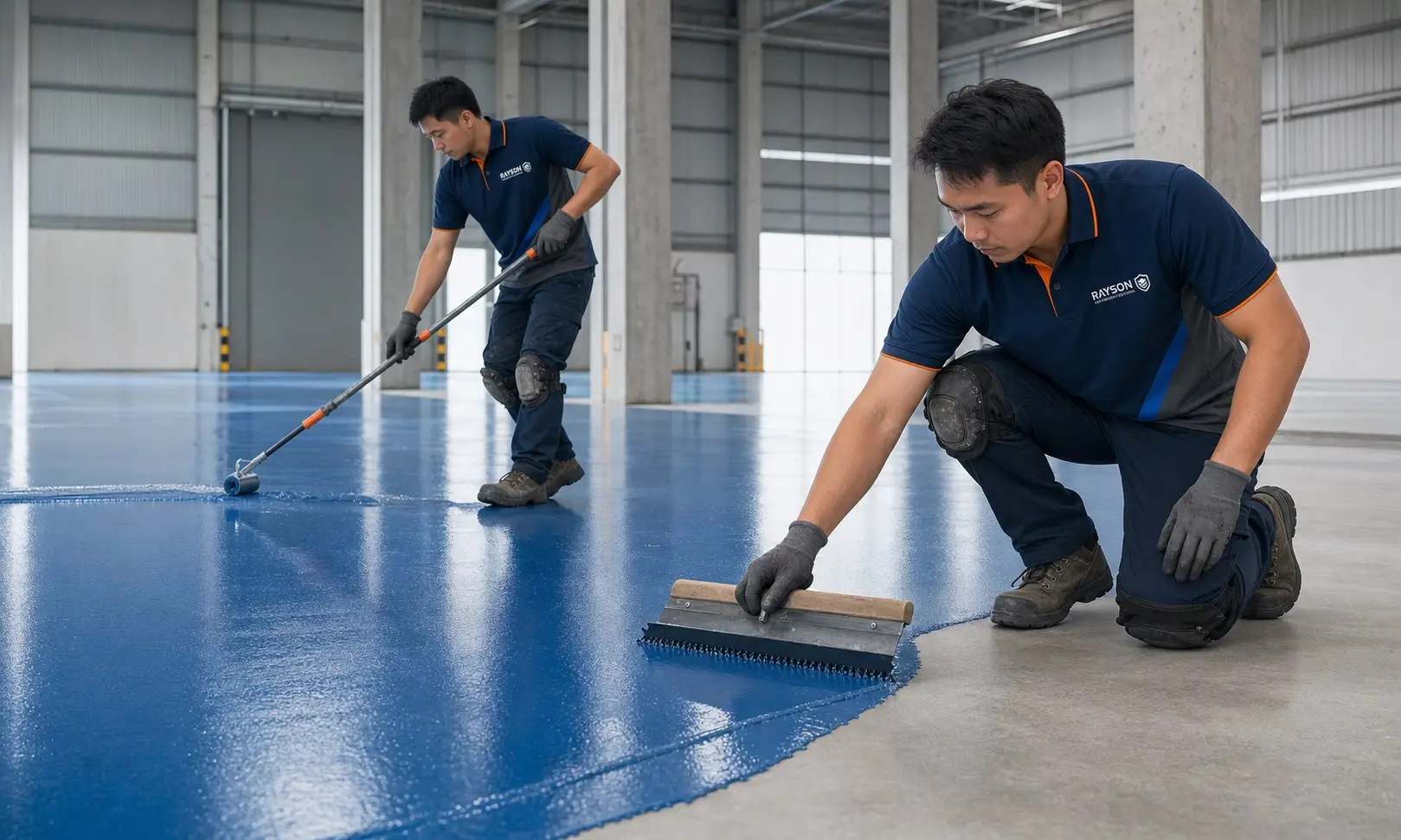
Where self-levelling epoxy earns its keep
- Daily forklift and reach-truck traffic — a thicker seamless layer takes wheel wear that thin films cannot.
- Clean production — joint-free, dead-flat, easy to wipe down and inspect.
- Worn substrate profiles — self-smoothing hides roller texture and minor surface history.
- Chemical splash zones — medium-to-heavy chemical duty within epoxy's resistance range.
- Demarcated logistics floors — lines and zones applied within the system, wearing with the floor.
Roller coat vs self-levelling vs screed
| Roller epoxy | Self-levelling epoxy | PU-cement screed |
|---|
| Film build | Thin coat | Thicker seamless layer | Heavier screed layer |
|---|
| Traffic duty | Light–medium | Medium–heavy | Heavy + thermal/chemical |
|---|
| Finish | Follows substrate profile | Self-smoothed, seamless | Self-smoothed, textured options |
|---|
| Relative cost | $ | $$ | $$$ |
|---|
| Rayson system | FloorGuard R50 | LevelShield SL120 | PurScreed PC70 |
|---|
The recommended Rayson build-up
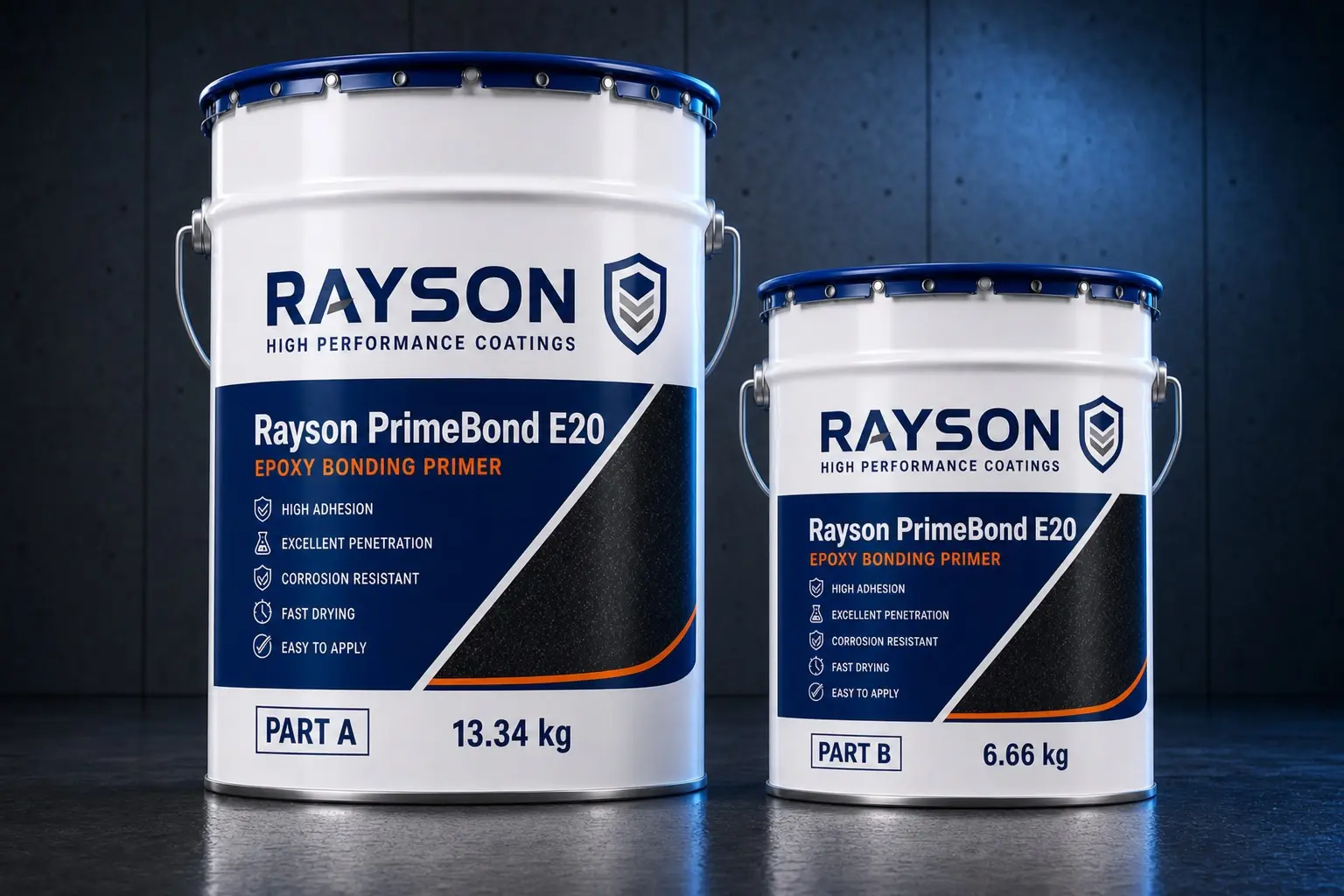
Prime with PrimeBond E20 — a
solvent-free epoxy bonding primer that anchors to dry or damp concrete
(PrimeBond E20 TDS (PDF)), which matters on
Singapore ground-bearing slabs. Body coat with
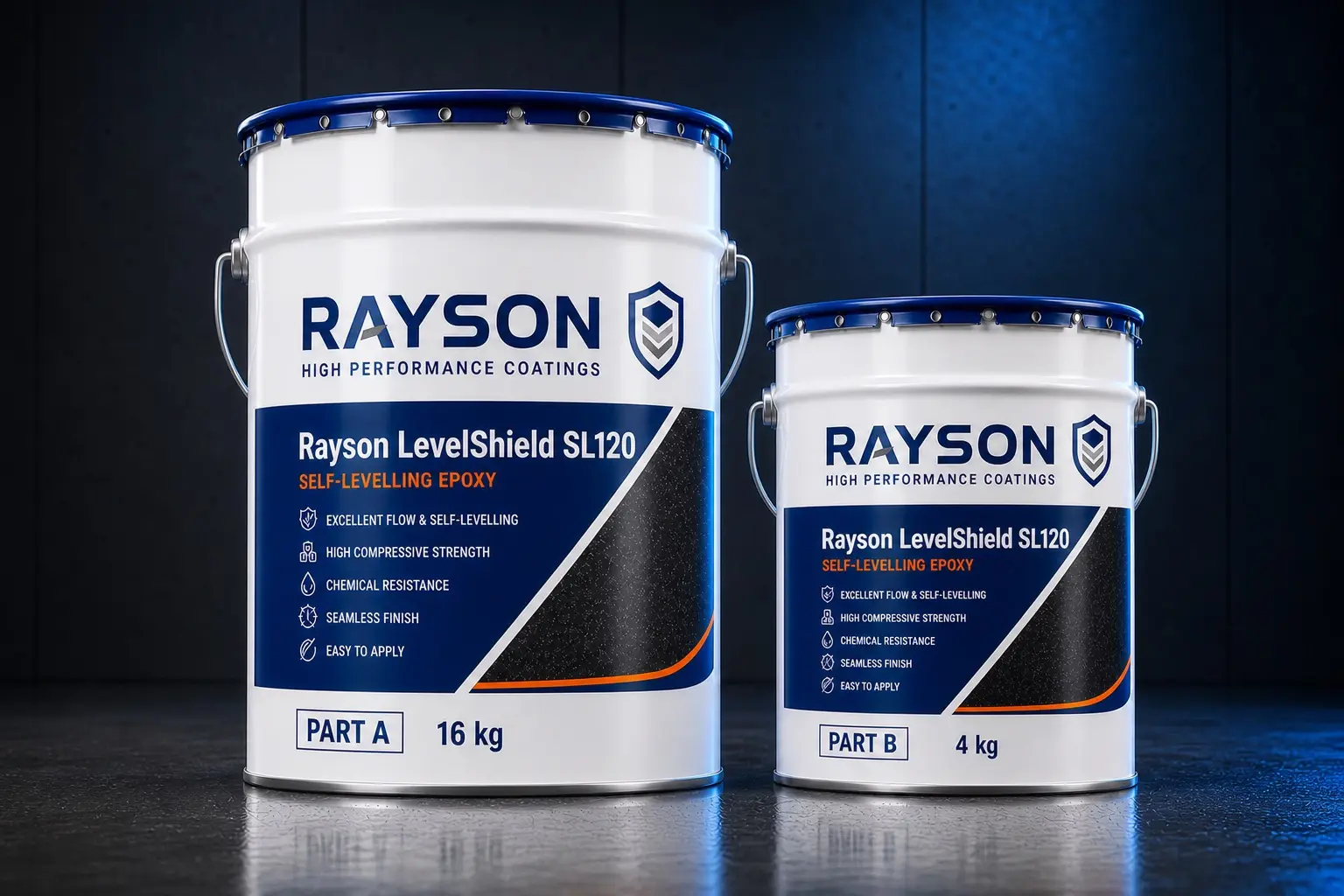
LevelShield SL120 solvent-free
self-smoothing epoxy (LevelShield SL120 TDS (PDF)).
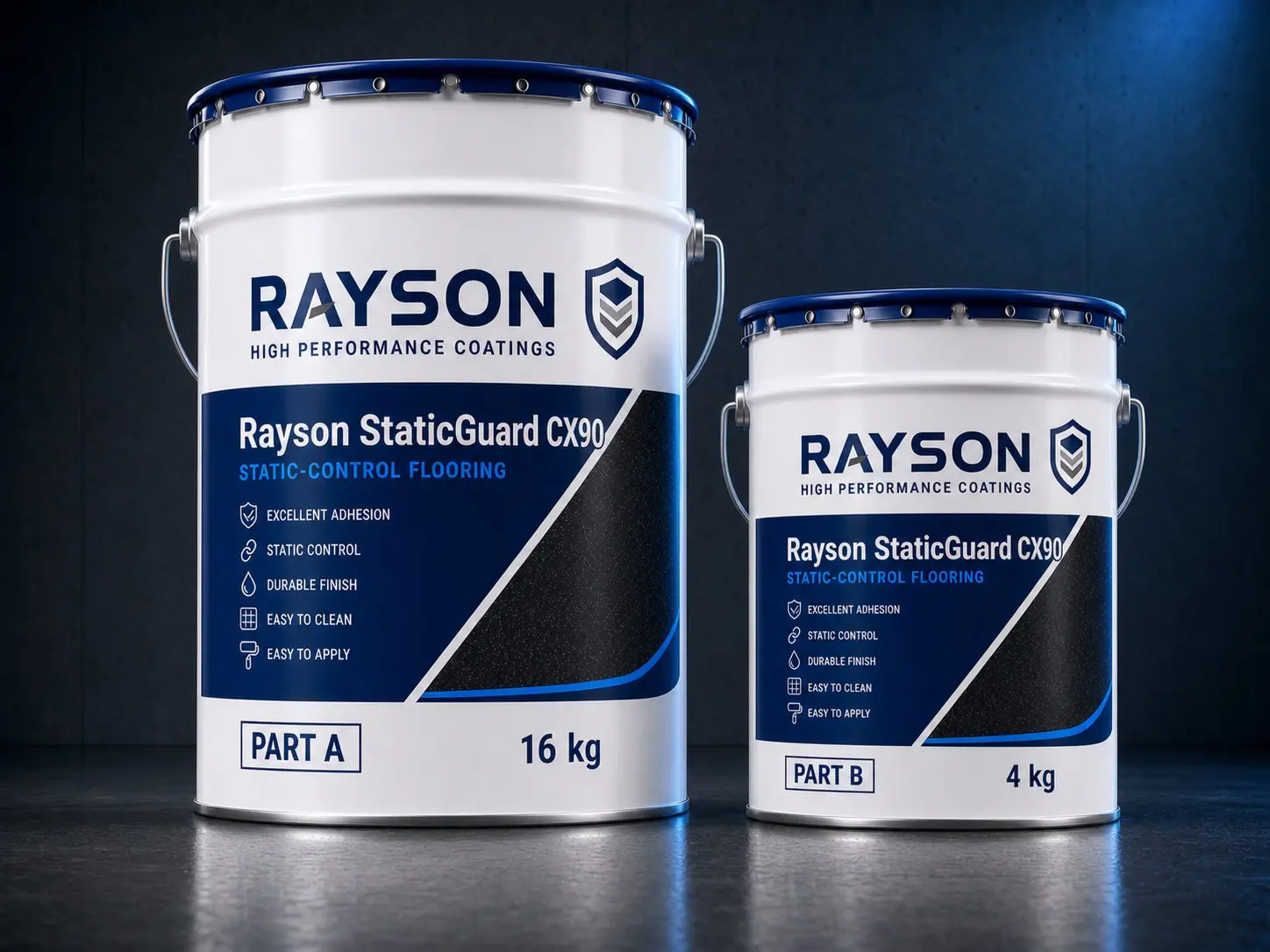
For ESD-protected areas, substitute the wearing surface with
StaticGuard CX90 conductive
self-smoothing epoxy (StaticGuard CX90 TDS (PDF)).
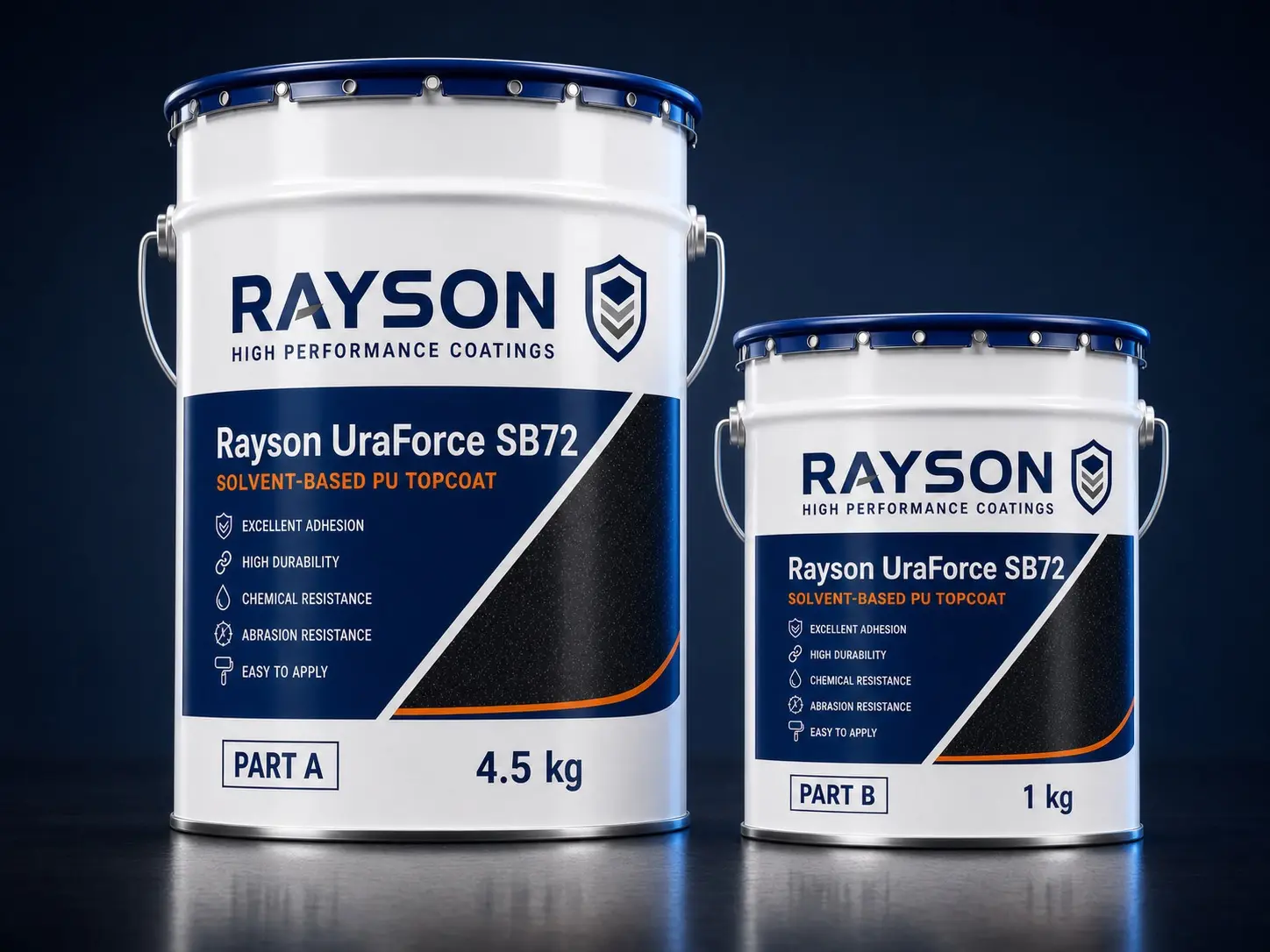
Sunlit zones take a UraForce SB72
UV-stable polyurethane finish so colour holds
(UraForce SB72 TDS (PDF)).
Best for: production areas, warehouses and loading bays,
clean environments, electronics and precision assembly (with StaticGuard for
ESD), showrooms wanting a seamless industrial finish.
Not suitable for: exteriors and sunlit zones without a PU
finish (epoxy yellows), hot wash-down and steam zones (use
PU screed), slabs with rising
damp beyond what damp-tolerant priming addresses, or over live structural
cracks.
Surface preparation
Diamond grinding or shot blasting to expose sound concrete, repair of spalls
and joints with MortarBond EM90,
moisture assessment, then priming. Self-levelling systems are less forgiving
of skipped preparation than roller coats — the flatter finish shows every
shortcut. Full sequence in the
surface preparation guide.
Manufacturer-direct in Singapore
LevelShield SL120 is manufactured by Rayson in Singapore and its complete
specification — build, coverage, cure windows, chemical duty — is published
in the open TDS library. Compare it line by
line against any alternative quote, then
talk to the team that makes it.
What we need to quote your floor
- Area (m²) and traffic — forklift types, frequency, point loads
- Whether ESD control is required in any zone
- Chemical exposures, if any
- Existing surface and condition, with photos
- Programme windows for preparation and cure
Related reading: all epoxy flooring systems
· ESD flooring Singapore
· epoxy floor application guide.