Interior duty
Seamless, cleanable floors for warehouses, production areas, plant rooms and commercial back-of-house spaces.
- Indoor exposure
- Concrete or prepared screed
- Traffic-led film build
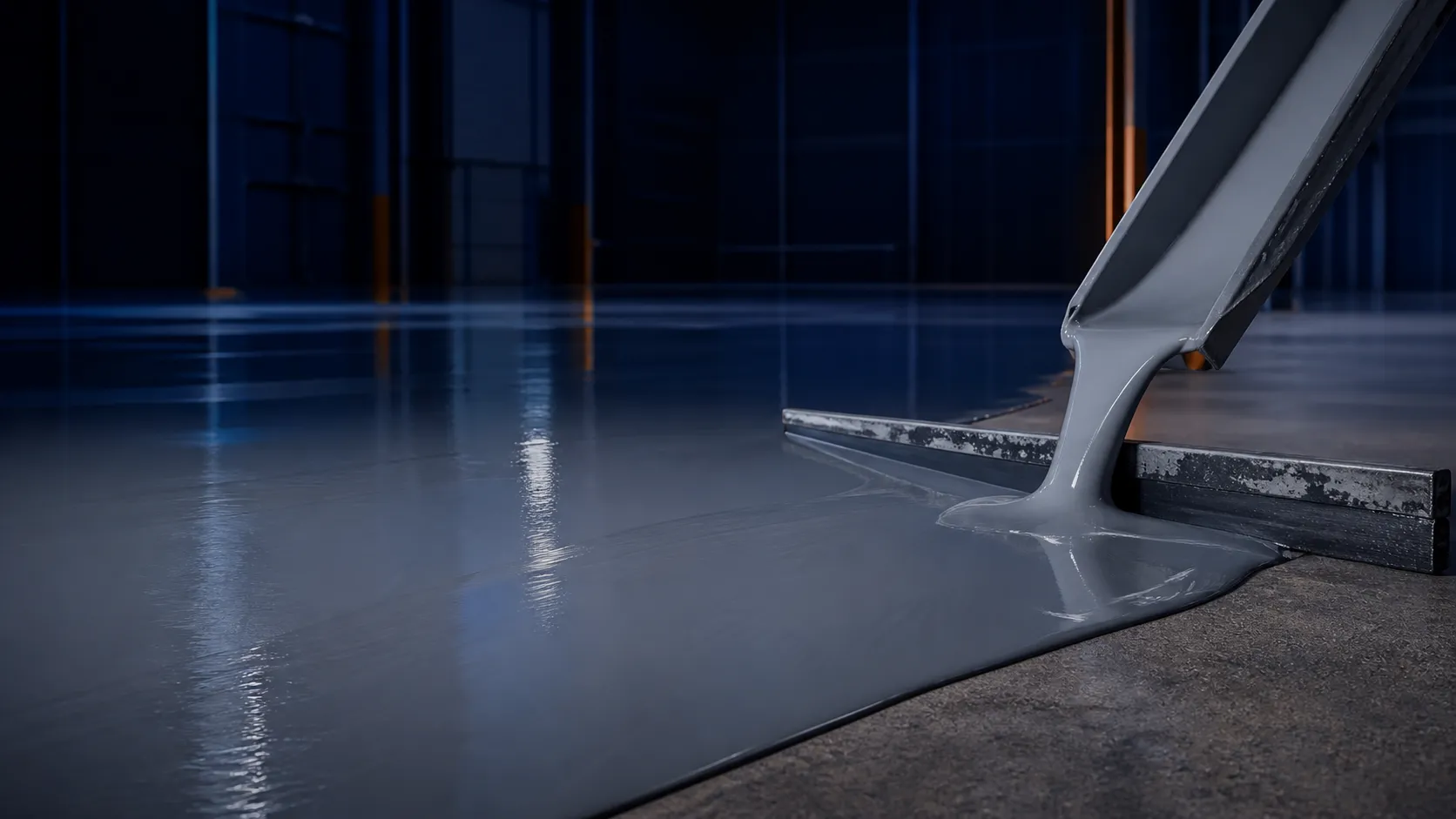
Rayson manufactures epoxy floor systems in Singapore. Tell us the traffic, slab condition and shutdown window; we will match the primer, epoxy build and finish to the conditions your floor will actually face.
The useful decision is not “epoxy or not?” It is whether the full system fits the real environment before work begins.
Seamless, cleanable floors for warehouses, production areas, plant rooms and commercial back-of-house spaces.
Damp slabs, existing coatings, joints, local cracking and narrow shutdown windows need a closer technical review.
Direct UV, hot wash-down, steam, thermal cycling or active movement can call for a PU, PU-cement or repair route.
Select the operating reality. The guidance, product route and enquiry context follow it.
For production floors, warehouse aisles and clean environments where a smooth, level wearing surface is required.
Typical route PrimeBond E20 → LevelShield SL120
Review LevelShield SL120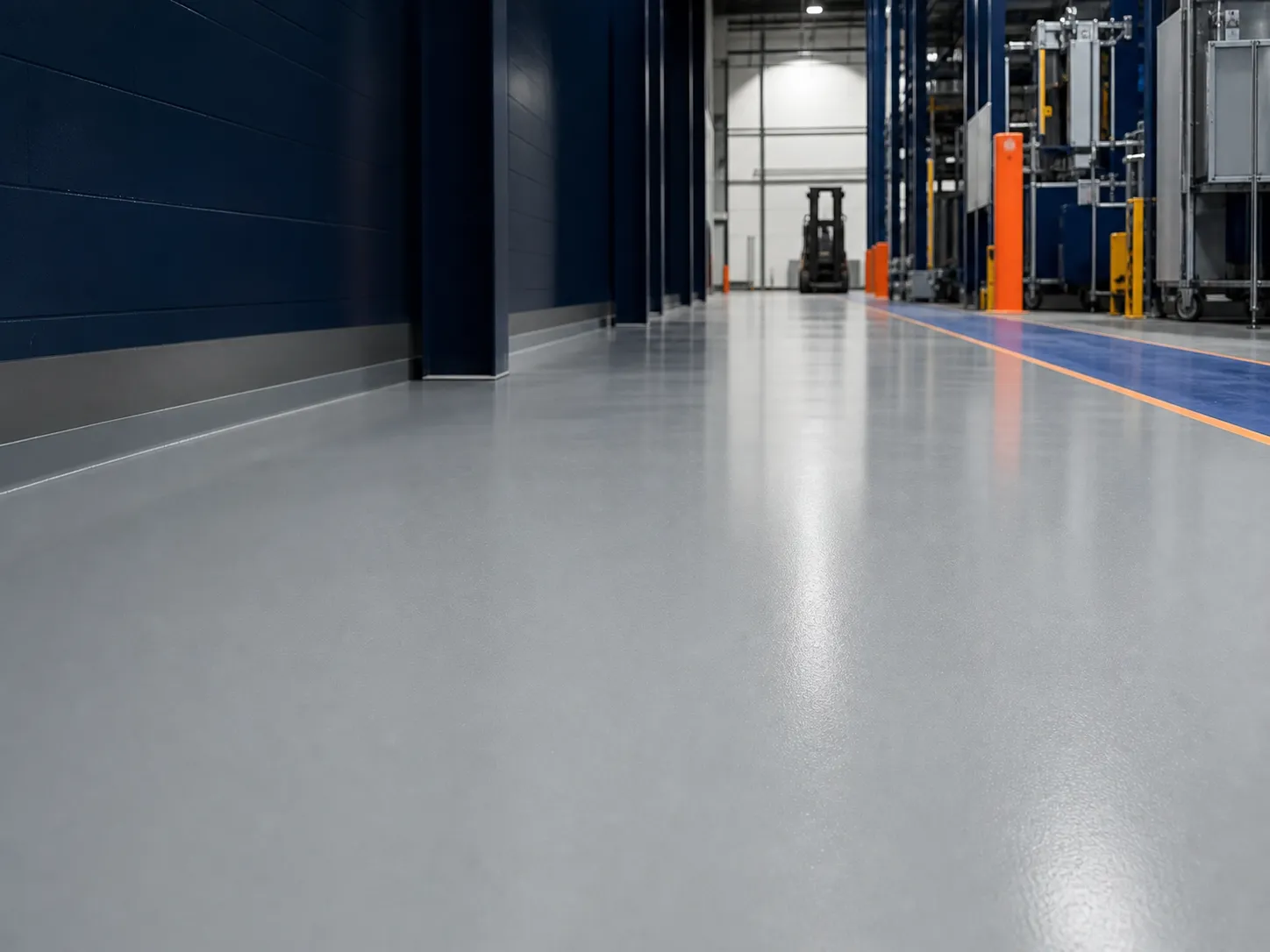
For plant rooms, service corridors and lighter-duty operational areas where cleanability and sensible maintenance matter.
Typical route Prepared substrate → FloorGuard R50
Review FloorGuard R50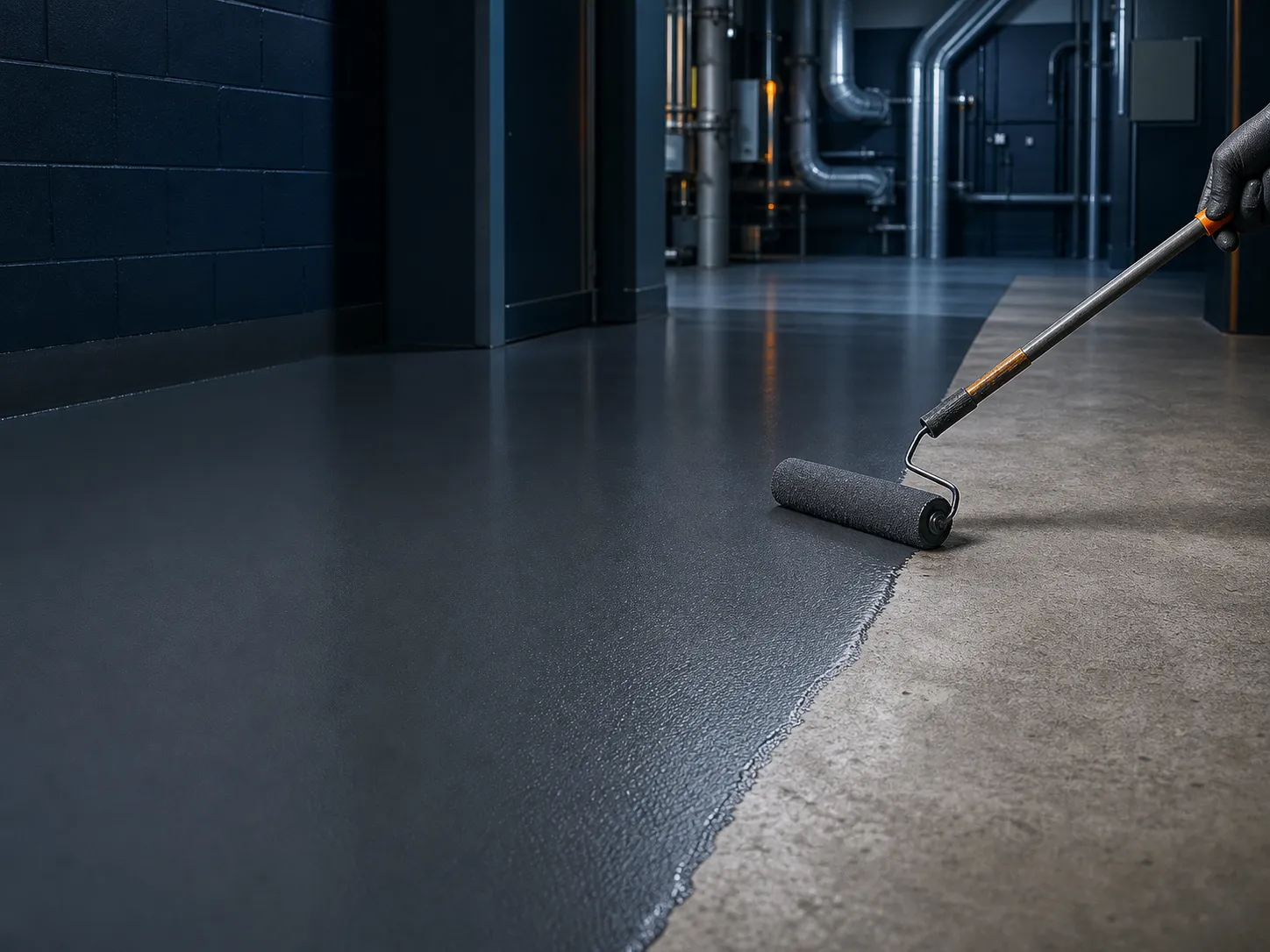
For schools, offices and retail settings where programme and occupancy shape the coating decision as much as the surface does.
Typical route HydroShield WE40 or WE45, selected for the substrate and duty
Review HydroShield systems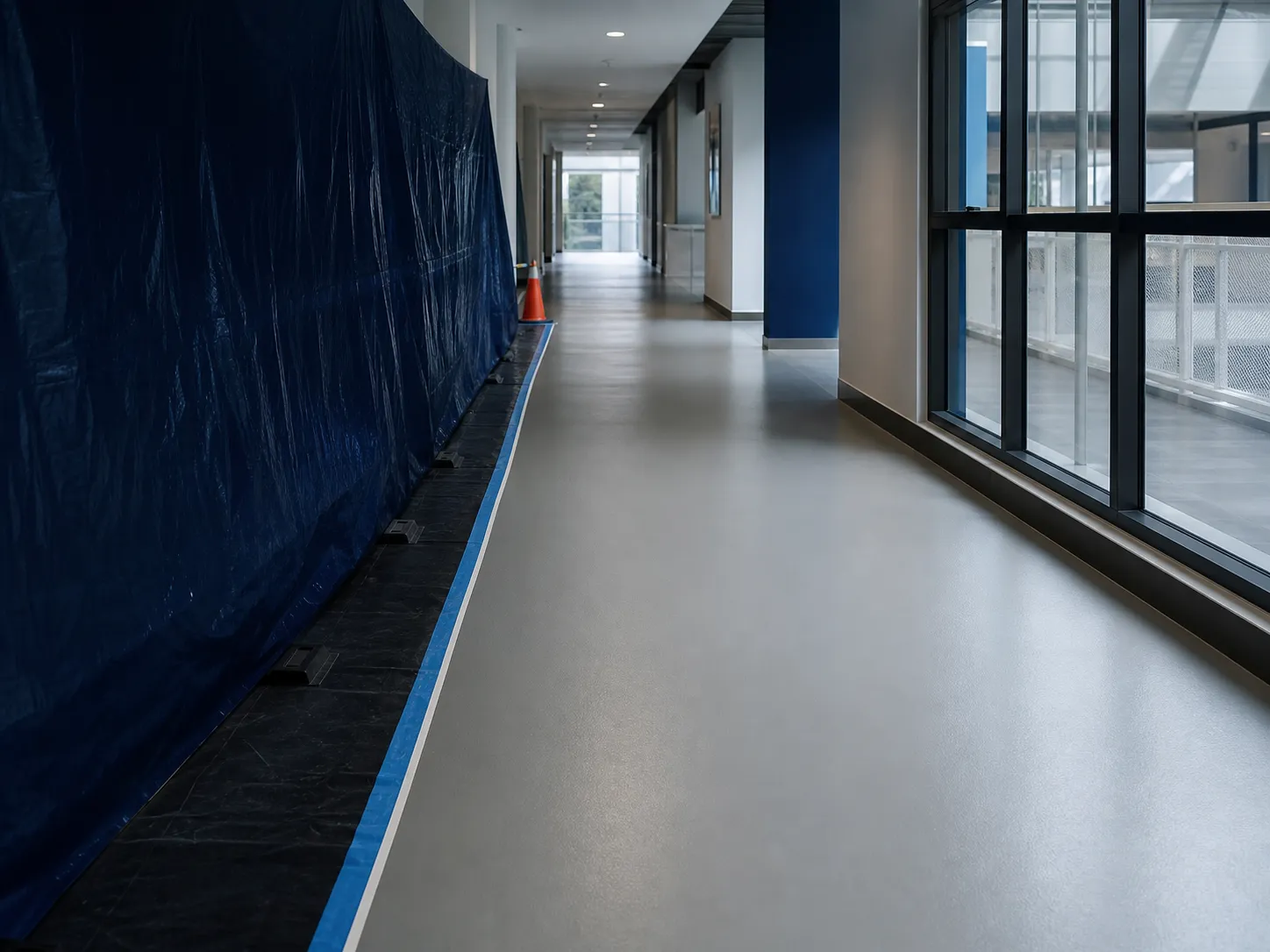
These are starting routes, not a substitute for checking the selected product TDS against the slab, exposure and programme.
For a seamless self-smoothing wearing surface where roller-applied film is not enough.
For prepared operational floors where a practical, maintainable epoxy coating is the requirement.
For selected buildings and programme constraints where low odour and reopening conditions matter.
For prepared mineral substrates where deeper penetration is required, review PrimeBond S30 and PrimeBond S30 TDS (PDF). Solvent-based primer selection requires suitable ventilation and is not the default route for occupied areas.
The visible surface is the final decision, not the first. Preparation, primer compatibility and film build determine whether the system stays bonded and useful.
Open PrimeBond E20 technical dataCheck the slab and select the primer from its actual condition. Active water ingress is a substrate problem first. Review surface preparation before coating.
High temperatures shorten working time. Mixing and application discipline protect the selected build; confirm the selected product’s timing in its TDS.
The system needs to fit the preparation, recoat and return-to-service window the project can really afford. Send the actual shutdown window for review.
Epoxy is a strong interior starting point. UV stability, thermal shock and severe wash-down can change the chemistry required.
| Epoxy | Polyurethane | PU-cement | |
|---|---|---|---|
| Best role | Interior primers and body coats | UV-stable finishes | Heat and wash-down duty |
| UV exposure | Not a standard exposed finish | Suitable with selected system | Confirm the required build |
| Thermal shock | Limited | Limited | Designed for demanding wet-process duty |
| Typical selection question | What traffic and substrate? | What UV or flexibility? | What heat, chemistry or wash-down? |
For full coating-system selection guidance, read how to select a coating system, review the epoxy application guide, or compare PU and PU-cement flooring routes.
Send the area, current condition, traffic and available shutdown window. Our technical team will review the starting point within one working day.
Answer four questions about your surface and conditions to shortlist suitable Rayson systems.
Find your systemEstimate material quantities from your floor area, coats and coverage rate.
Estimate quantitiesOpen technical data sheets for every Rayson product — no forms, no gating.
Open the libraryA properly specified and prepared epoxy floor can serve for many years. Surface preparation quality and matching the build-up to real traffic are more important than simply choosing the thickest coating.
Standard epoxy can yellow under UV. Exposed areas normally need a UV-stable polyurethane finish; select the full build-up for the exposure rather than using indoor epoxy alone.
Only with a suitable damp-tolerant primer and after checking the substrate. Standing water and active water ingress must be resolved first.
Epoxy is commonly used for hard, economical interior body coats. Polyurethane provides UV stability and flexibility. For hot wash-down and thermal shock, consider PU-cement instead.
Water-based epoxy is useful where low odour matters. Solvent-free systems can provide greater film build for heavier-duty floor applications. Confirm the selected product build in its TDS.
Film build follows the duty, not a default thickness. Roller-applied coatings, self-levelling epoxy floors and screeds are different systems. Confirm the selected build, substrate preparation and coverage against the relevant product TDS.
The quotation depends on the existing slab, preparation and repair work, area, selected system build, access and the available shutdown window. Send the floor area, current condition and programme for a system-specific review.
The slab needs to be sound, mechanically prepared and dust-free before priming. Weak concrete, local defects, standing water and active moisture ingress must be addressed before the epoxy system is selected.
Tell us your surface, area and timeline — our Singapore technical team will recommend a practical system and price it fast.
Rayson assistant
Answers from Rayson's own product information
Guidance only — confirm specifications with the Rayson technical team.