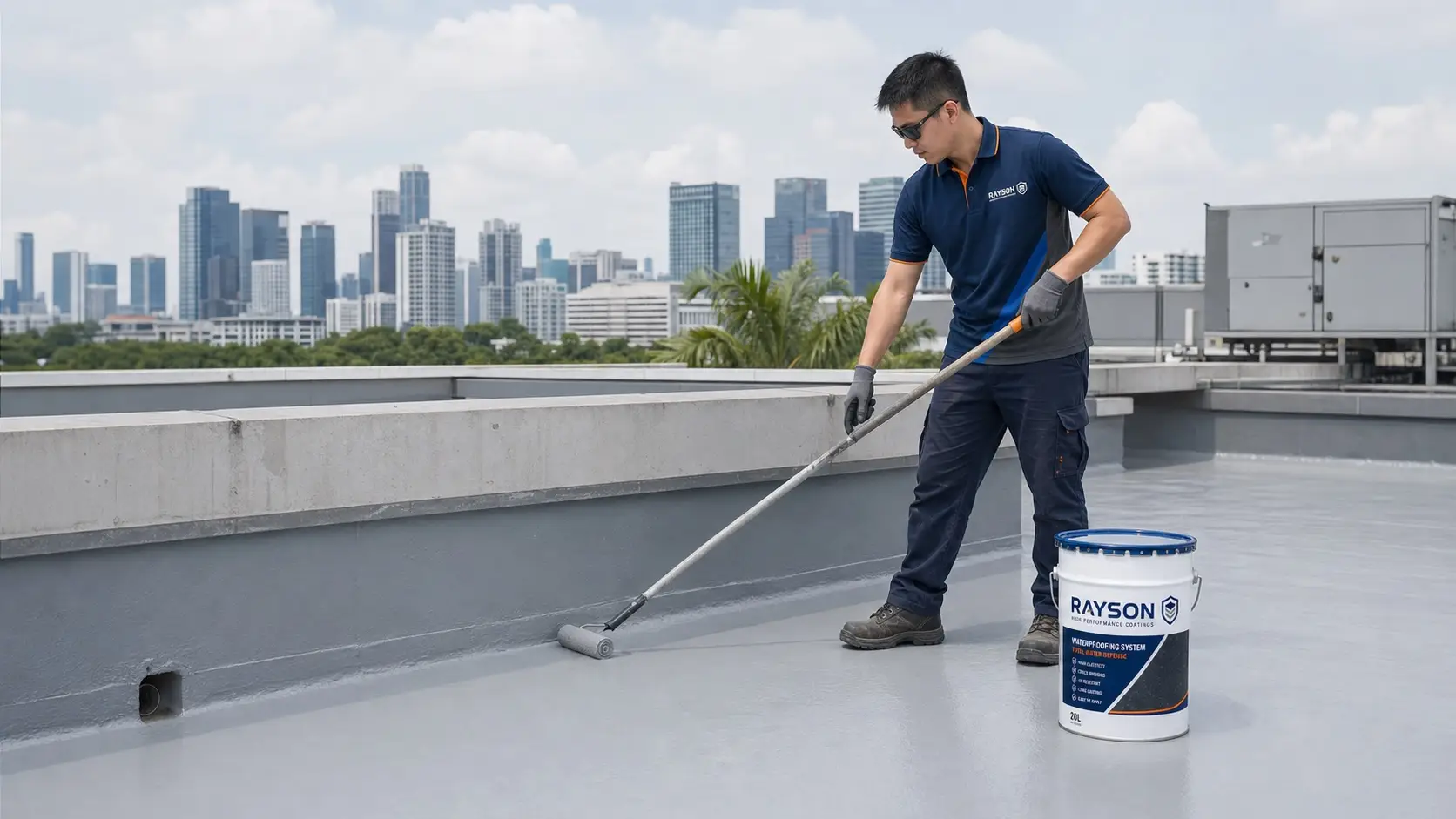
Rayson SiteForce technician roller-applying a seamless waterproof membrane on a Singapore rooftop
Roof Waterproofing Singapore

Roof waterproofing coating that outlasts Singapore weather

Reviewed: July 2026

Singapore roofs fail at laps, cracks and details under year-round UV and rain. A seamless cold-applied membrane removes the laps: Rayson SealForce RC40 aliphatic polyurea is UV-stable, walkable, carries certified cool-roof reflectance, and bonds over concrete, screed, metal, old membranes and bitumen — no hot works. Manufactured in Singapore with the full specification in an open technical data sheet.

What a Singapore roof must withstand

  • UV, every day of the year — coatings that chalk or embrittle fail early here.
  • Monsoon ponding — intense rain plus imperfect falls means standing water.
  • Thermal cycling — surfaces heat through the day and cool in storms; membranes must stretch.
  • Foot traffic — maintenance crews walk the roof; the membrane must be walkable.
  • Details and penetrations — upstands, drains, M&E plinths: where most leaks start.
  • Heat load — a dark absorbent roof pushes cooling costs up; reflectance pushes them down.

Roof waterproofing systems compared

Cold-applied polyureaSpray polyureaTorch-on membrane
SeamsSeamlessSeamlessLapped sheets
Hot works neededNoNo (hot spray plant)Yes — open flame
UV stabilityExcellent (aliphatic)GoodGood (mineral cap)
Best onRe-roofing, complex detailsTanks, large fast programmesNew-build plain areas
Rayson systemSealForce RC40SealForce SP200

The recommended Rayson build-up

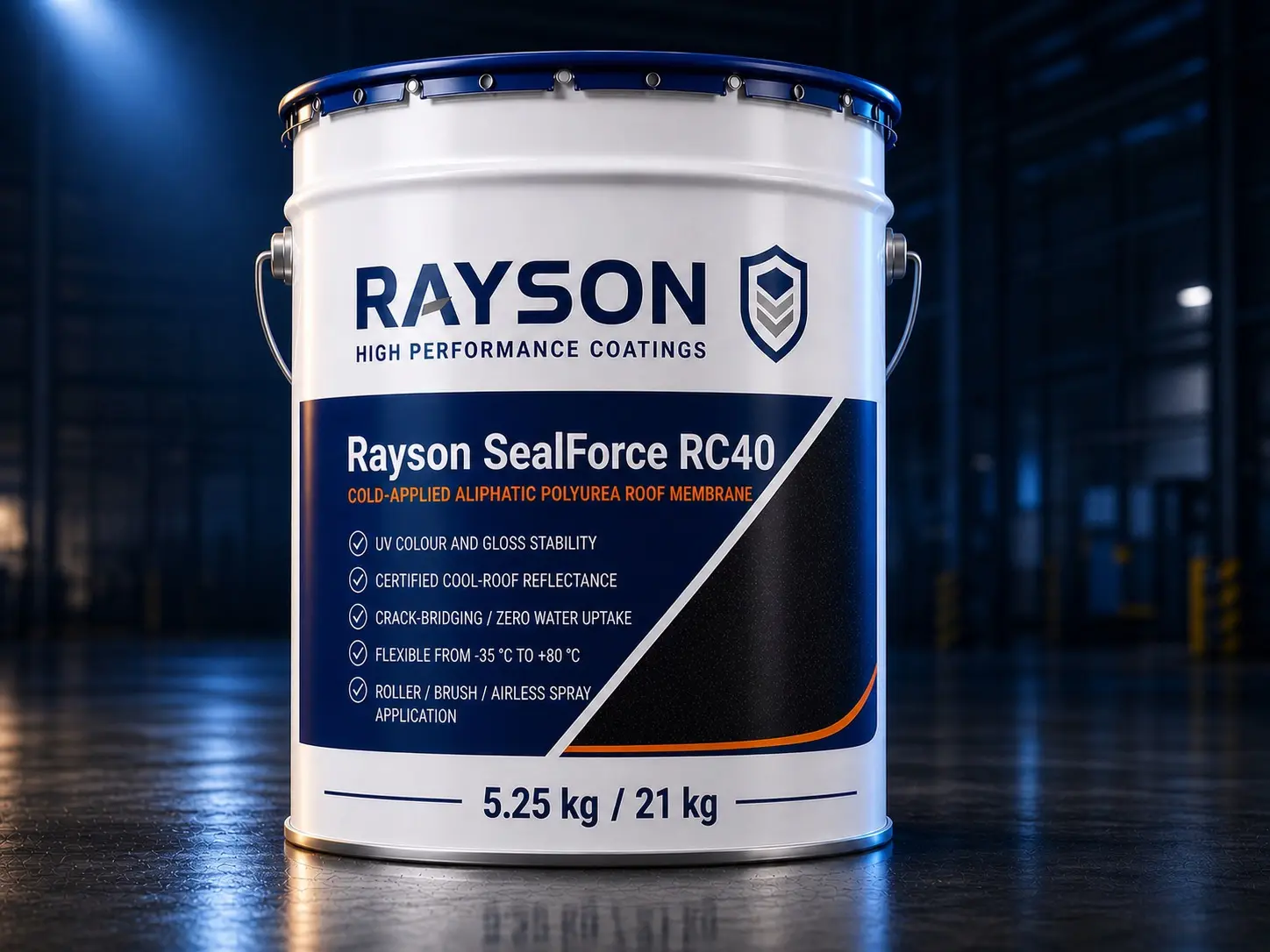
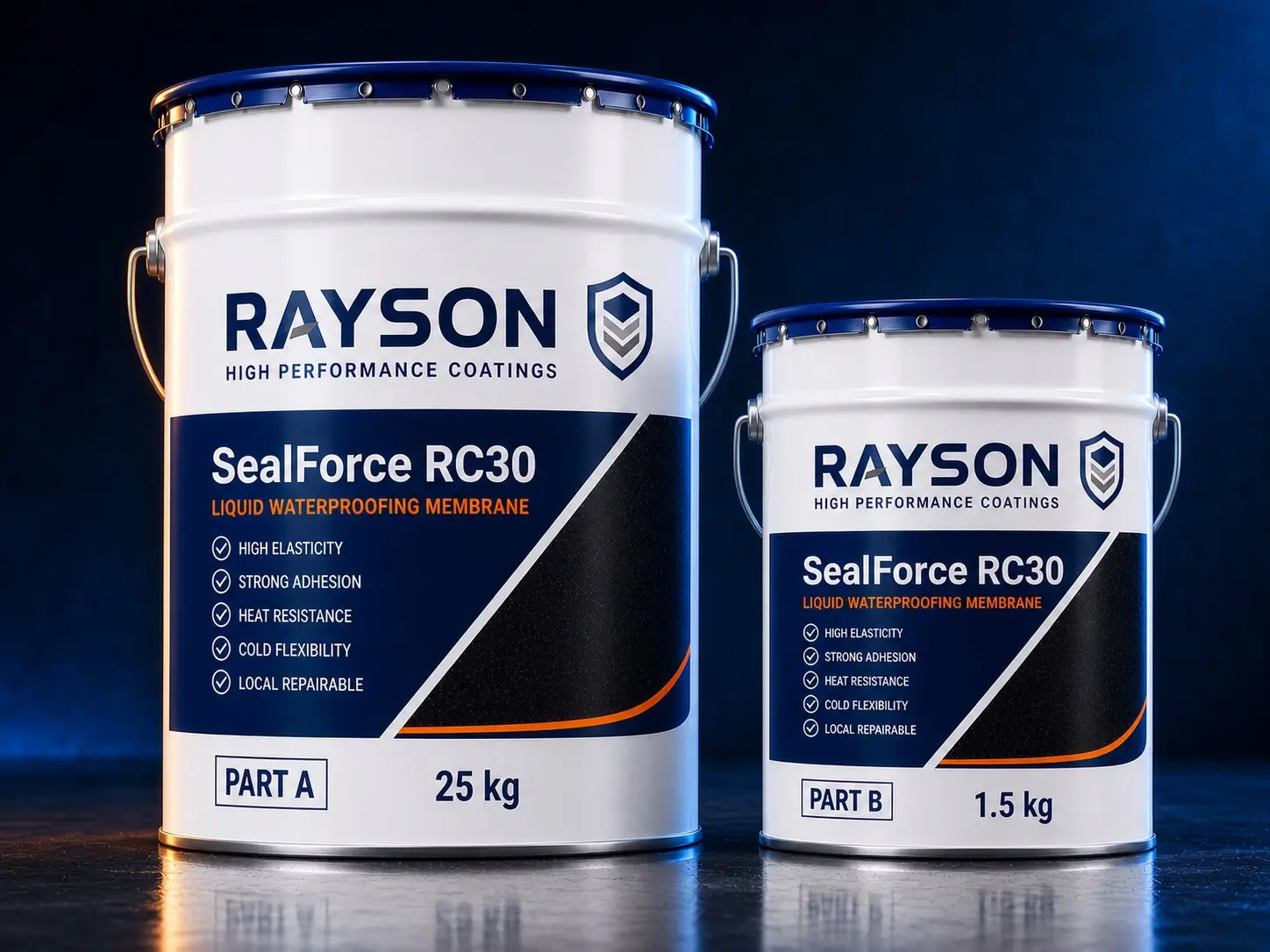
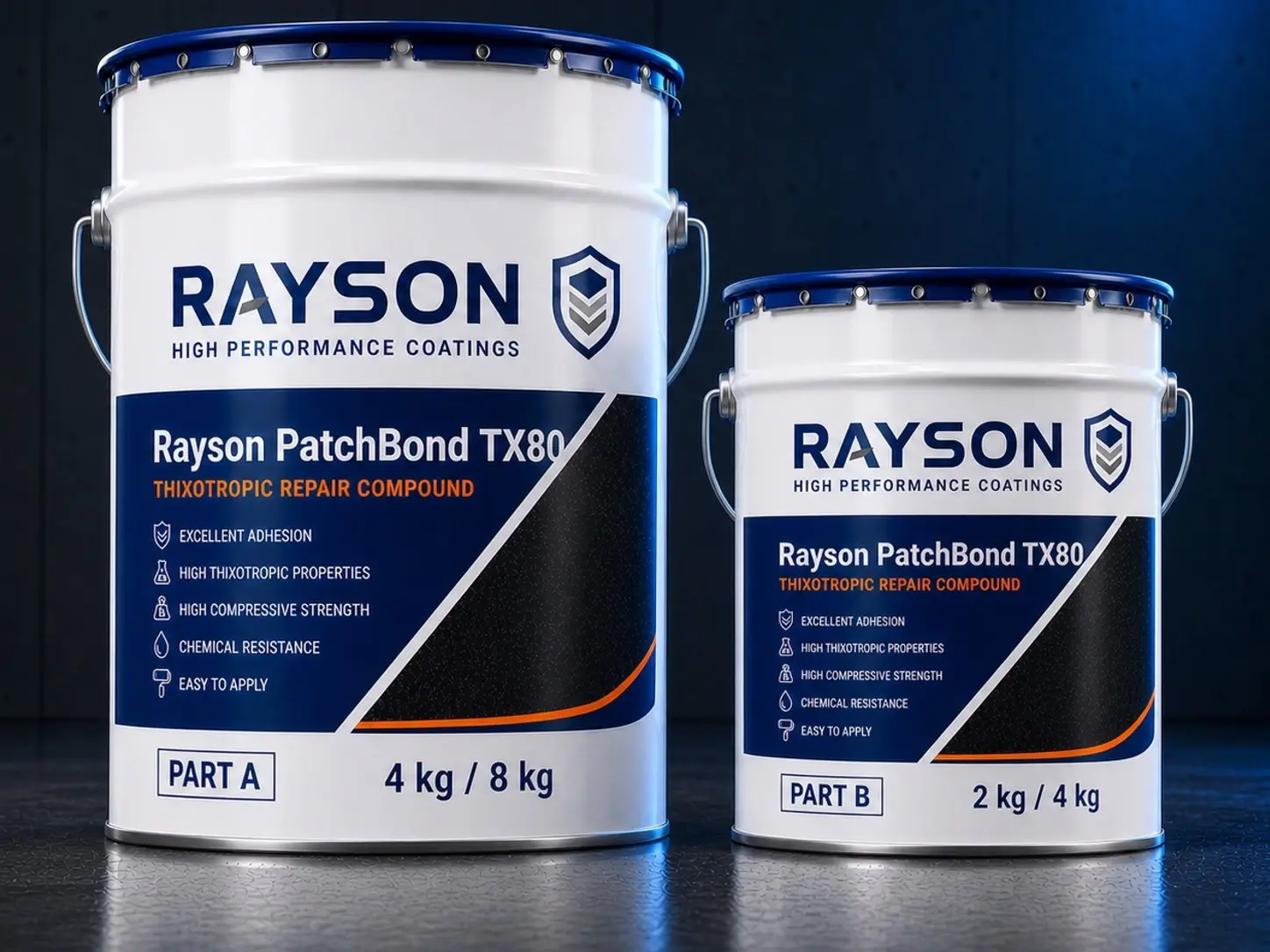
Exposed flat and pitched roofs: SealForce RC40 cold-applied aliphatic polyurea membrane (SealForce RC40 TDS (PDF)) — roller, brush or spray applied over concrete, screed, old membranes, metal, PU foam or bitumen, with certified cool-roof reflectance. Wet areas, gutters and deck transitions: SealForce RC30 elastic polyurea membrane (SealForce RC30 TDS (PDF)). Cracks, joints and upstand details are pre-treated with PatchBond TX80 non-sag epoxy repair compound, which bonds to vertical, overhead and damp concrete (PatchBond TX80 TDS (PDF)).

Best for: exposed RC flat roofs, metal roofs, re-roofing over old membranes without strip-off, roofs with heavy M&E and foot traffic, buildings chasing cooling-load reduction.
Not suitable for: roofs with saturated, debonded substrates (dry-out and repair first), active structural movement without joint treatment, or ponding from failed falls that regrading should fix — a membrane is not a substitute for drainage.

Surface preparation on roofs

Survey first: identify debonded areas, waterlogged insulation and failed details. Then mechanical cleaning, cutting out unsound material, repairing with PatchBond TX80, and detailing drains, upstands and penetrations before the field membrane. The surface preparation guide covers the principles; roof details are agreed per project.

Claims you can check

UV stability, walkability, substrate compatibility and reflectance for SealForce RC40 are published in its technical data sheet, in the open Rayson TDS library. We manufacture in Singapore — if a claim matters to your specification, ask us to substantiate it before you commit.

What we need to quote your roof

  • Roof type and area — RC flat, metal, existing membrane type
  • Known leaks and their locations (photos of stains help)
  • Detail count: upstands, drains, penetrations, M&E plinths
  • Access — and whether the building stays occupied during works
  • Whether cool-roof reflectance matters to your energy targets

Related reading: coating vs membrane compared · all Rayson waterproofing systems · roofs & exposed structures application page.
Rayson products for roof waterproofing

Rayson SealForce RC40 — Polyurea waterproofing membranes
Waterproof SealForce

Rayson SealForce RC40

Single-pack · 5.25 or 21 kg

Rayson SealForce RC40 is a two-component, cold-applied aliphatic polyurea waterproofing membrane for exposed roofs — roller-, brush- or spray-applied, UV-stable and walkable, with certified cool-roof reflectance.

Surfaces
Roofs, Concrete
Chemistry
Polyurea
Rayson SealForce RC30 — Polyurea waterproofing membranes
Waterproof SealForce

Rayson SealForce RC30

Two-part · 25 kg + 1.5 kg

Rayson SealForce RC30 is a two-component, roller-applied polyurea-based liquid waterproofing membrane — highly elastic and hydrophobic, bonding strongly to concrete, tile, metal and asphalt for wet areas, roofs and car parks.

Surfaces
Concrete, Cement screed
Chemistry
Polyurea
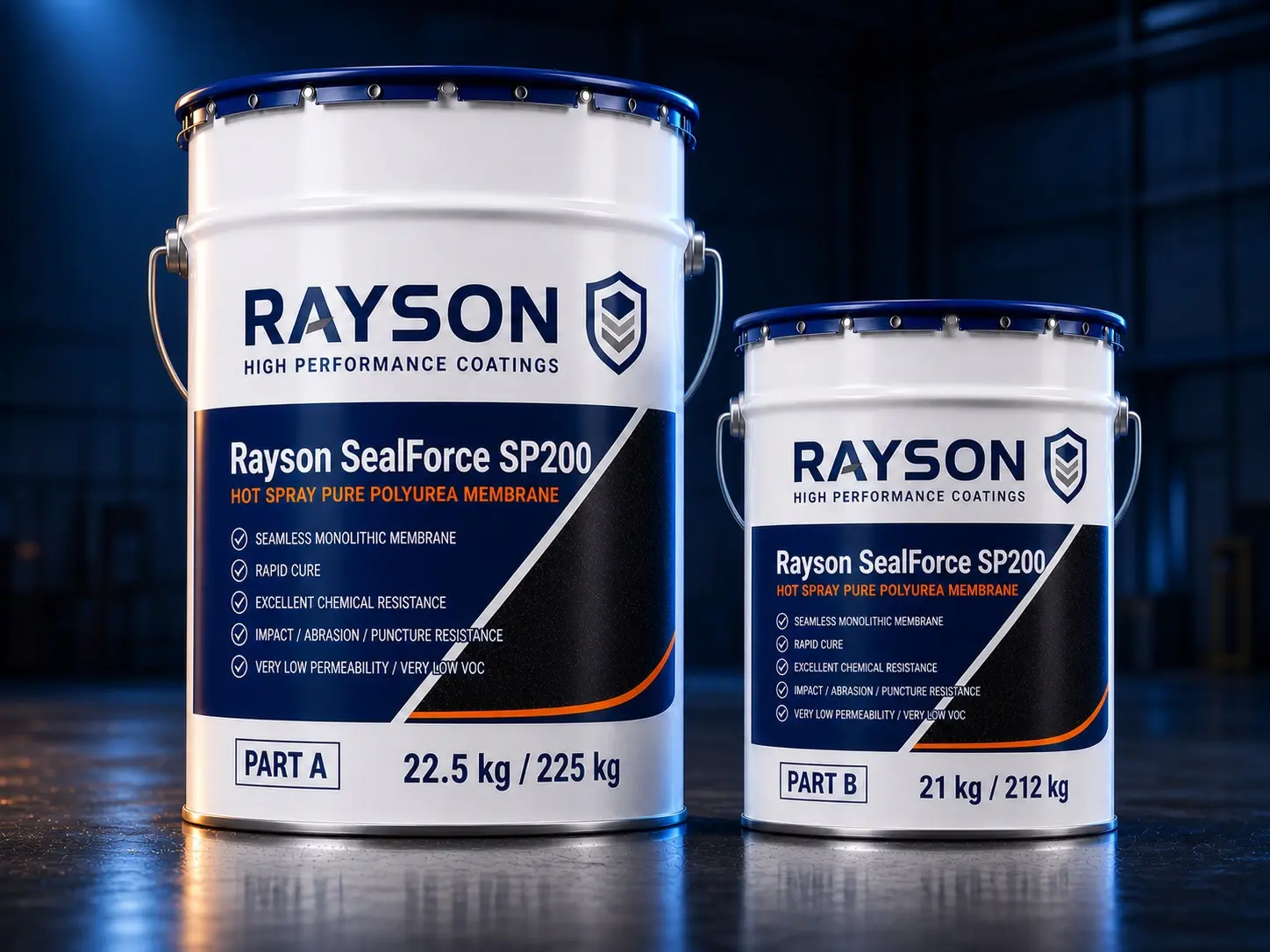
Rayson SealForce SP200 — Polyurea waterproofing membranes
Waterproof SealForce

Rayson SealForce SP200

Fast-curing spray polyurea

Rayson SealForce SP200 is a hot spray-applied, 100% solids, rapid-curing pure polyurea membrane that forms a seamless, chemically resistant waterproof and protective lining on concrete and steel.

Surfaces
Concrete, Exposed structures
Chemistry
Polyurea
Rayson PatchBond TX80 — Repair mortars & compounds
Repair PatchBond

Rayson PatchBond TX80

Two-part epoxy repair system

Rayson PatchBond TX80 is a two-component, solvent-free thixotropic epoxy adhesive and repair compound with exceptional sag resistance that bonds and fills on vertical, overhead and even mat-damp concrete surfaces.

Surfaces
Concrete, Walls
Chemistry
Epoxy

Frequently asked questions

What is the best roof waterproofing coating for Singapore weather?

For exposed roofs, a cold-applied aliphatic polyurea membrane — Rayson SealForce RC40 — because it is UV-stable, walkable and carries certified cool-roof reflectance for Singapore heat. It applies by roller, brush or spray over concrete, screed, old membranes, metal and even bitumen, avoiding hot works entirely.

Can you waterproof over an old membrane without stripping it?

Often yes. SealForce RC40 is formulated to bond over sound existing membranes, PU foam and bitumen, avoiding full strip-off cost and waste. Failed, debonded or waterlogged areas must still be cut out and repaired first — a survey decides how much.

Liquid-applied membrane or torch-on — which is better?

Liquid-applied membranes are seamless — no laps, which is where torch-on sheets typically fail — and they need no open flame, which matters on occupied buildings. Torch-on remains common on new-build where large plain areas suit sheet goods. For re-roofing over complex details, seamless liquid systems have the practical edge.

What does cool-roof reflectance actually do?

A reflective roof coating bounces solar radiation instead of absorbing it, lowering roof surface temperature and the heat load transmitted into the building. SealForce RC40 carries certified cool-roof reflectance — one of the few roof-coating claims that is independently measurable.

How are cracks and joints treated before coating a roof?

Cracks, joints and upstand details are the failure points, so they are treated first: cut out, filled with PatchBond TX80 non-sag epoxy repair compound — which works on vertical, overhead and damp concrete — and detailed with reinforcement before the membrane goes on.

Not sure which system fits your project?

Tell us your surface, area and timeline — our Singapore technical team will recommend a practical system and price it fast.