Mechanical and chemical protection
Chemical and abrasion protection for demanding industrial service.
Rayson PurScreed PC70 is a four-part, water-based polyurethane-cement self-smoothing screed installed at 1.5–3 mm for medium to heavy-duty industrial floors with high chemical resistance.
Best for food and beverage production, chemical processing and hard-traffic industrial floors that need a tough, chemically resistant screed.
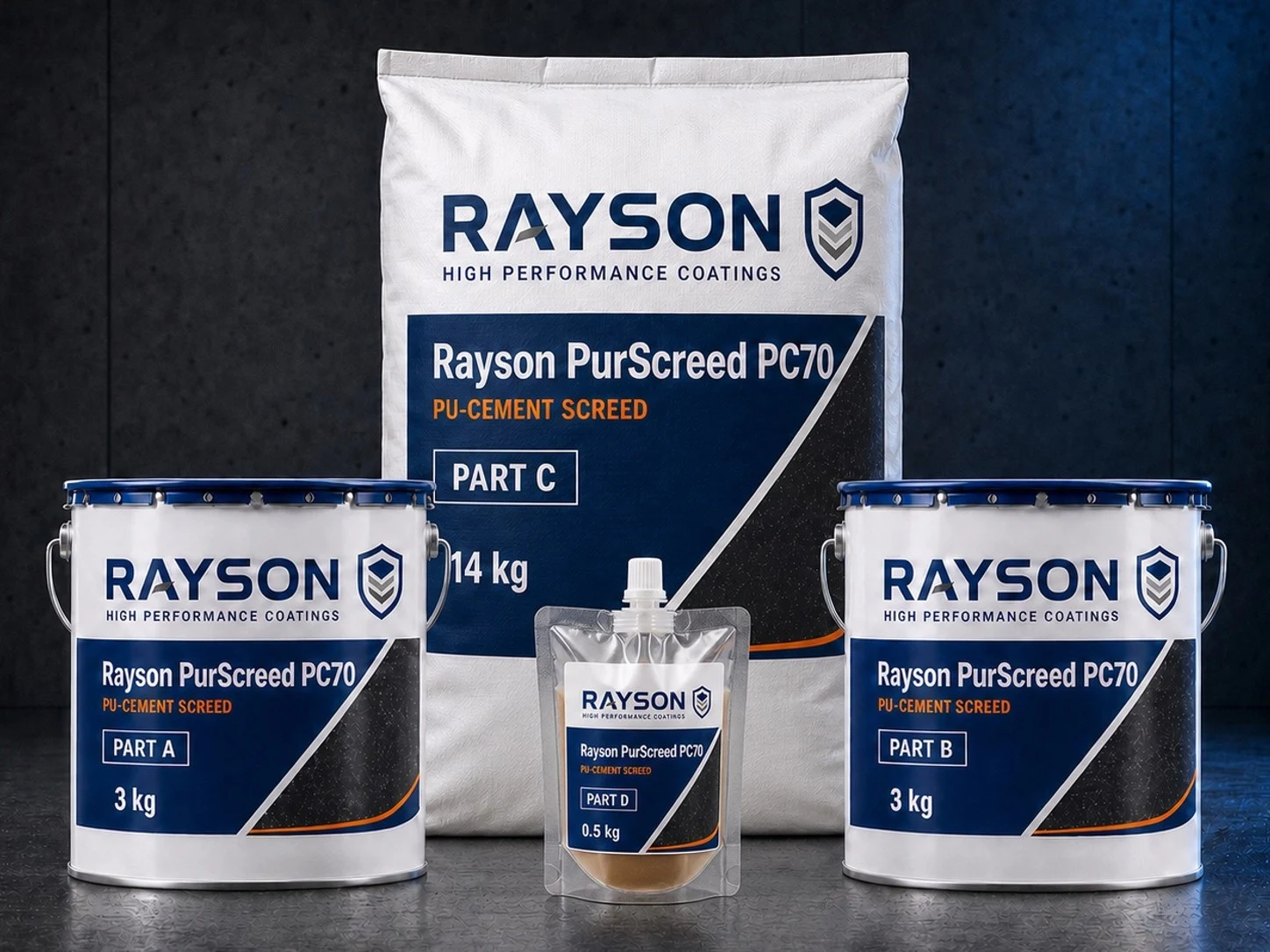
Short answer: consider PurScreed PC70 when food production, chemical processing or hard-traffic industrial floors need more mechanical and chemical headroom than a conventional thin-film epoxy coating. The final build-up must still be confirmed against the substrate, exposure and site conditions.
Chemical and abrasion protection for demanding industrial service.
Reliable adhesion when concrete is correctly prepared.
A seamless, self-smoothing polyurethane-cement body layer.
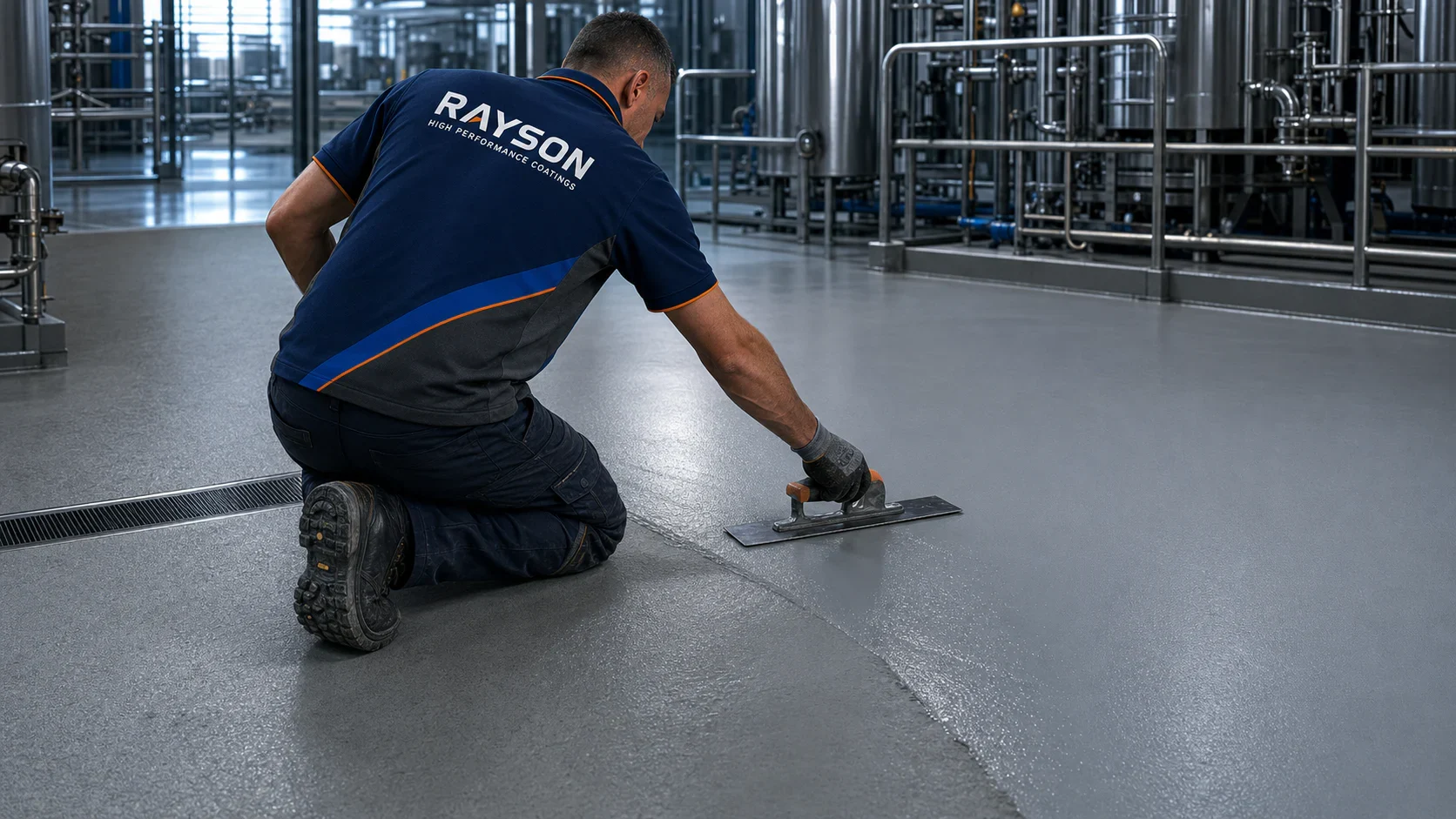
The seamless PU-cement surface suits food and beverage production, chemical processing and heavily trafficked industrial areas. The image shows a representative installation environment; slip resistance, falls and detailing must be selected for the project.
This sequence supports early planning. It does not replace the current Technical Data Sheet, approved method statement or project-specific technical review.
Concrete must meet the stated age, strength and moisture requirements, with weak material, contamination and defects removed.
Parts A, B, C and D must be mechanically combined in the order stated in the current method statement until uniform.
Place continuously and control thickness. Pot life is approximately 15–20 minutes at 30°C.
Keep the installed layer free from contamination and damage while curing. Final cure is 7 days.
This diagram explains a typical system position, not a fixed specification. Primer, thickness and detailing must be confirmed for the substrate and project conditions.
PurScreed PC70 forms the principal thickness and mechanical performance of the floor. The complete build-up, including any primer or base, must be confirmed for the project.
Review primers, body layers, finishes or specialist components connected to this product.
Use these figures for early selection. Rayson should confirm the final build-up and quantity against the site conditions.
Actual use varies with the substrate
Approximate pot life at 30°C
Protect the floor throughout curing
A 3 · B 3 · C 14 · D 0.5 kg
These links continue the comparison; they are not automatic substitutes. Confirm the substrate, exposure and complete build-up before selection.
Send the floor area, concrete condition, expected traffic, chemical exposure, drainage details and programme. The technical team can help review the build-up and estimated quantity.
When the exposure outruns epoxy — aggressive chemical spill zones, hot wet processing and heavy industrial traffic. For drier, lighter duties an epoxy system like LevelShield SL120 is usually more economical.
Between 1.5 and 3 mm as a self-smoothing screed, selected against loading. Heavier mechanical duty sits at the top of that range — our technical team will match thickness to your traffic.
PU-cement chemistry is the industry answer for thermally aggressive wash-down zones. Verify your specific wash-down regime and temperature limits with our team.
Light grey and green as standard; other colours are available on request with lead time.
The resin, hardener and powder must combine in order and mix fully — shortcuts leave unmixed powder that weakens the screed. Allow 3–4 minutes of mixing after the powder bag is empty.
In hygiene-critical areas, yes — coved details close the floor-wall junction against water and bacteria. Coving is detailed as part of the floor system design.
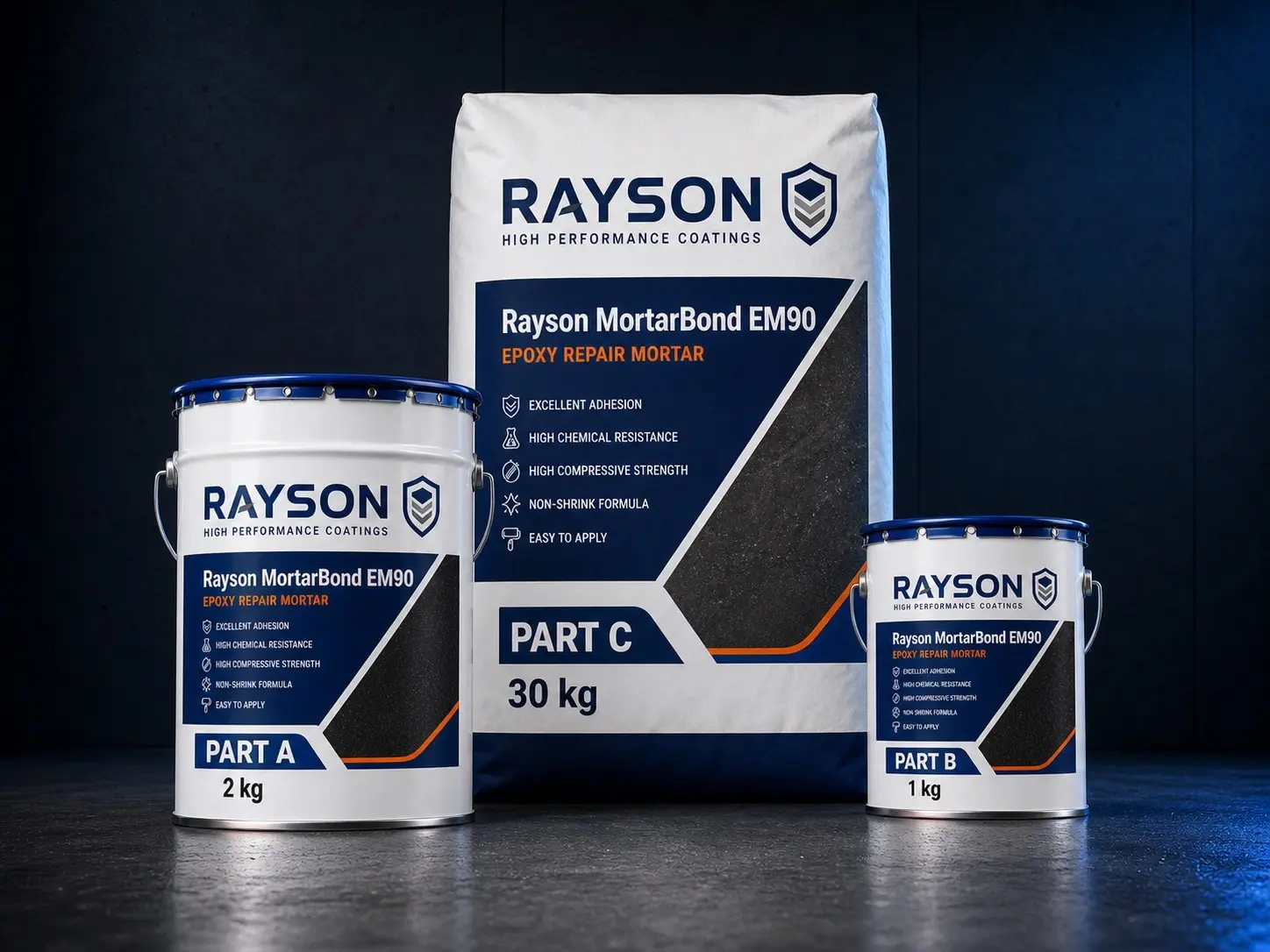
Three-part · 33 kg kit
Rayson MortarBond EM90 is a three-pack, solvent-free epoxy mortar — resin, hardener and graded aggregate — that reinstates concrete floors with a non-shrink, highly abrasion-resistant repair.
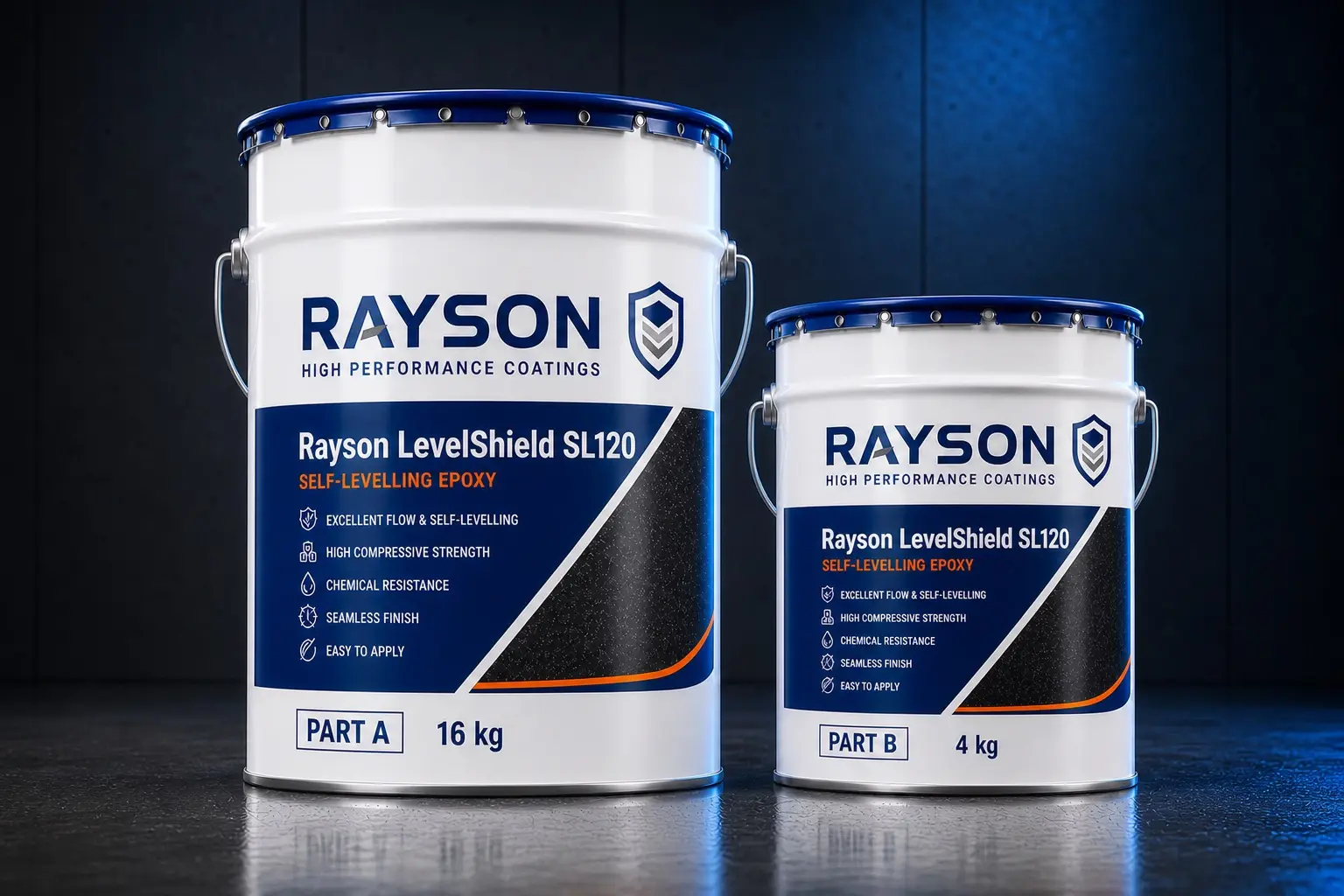
Self-smoothing · solvent-free
Rayson LevelShield SL120 is a solvent-free, two-component, self-smoothing epoxy floor system that delivers a seamless wearing surface with medium to heavy chemical resistance and high mechanical strength.
Solvent-free · damp tolerant
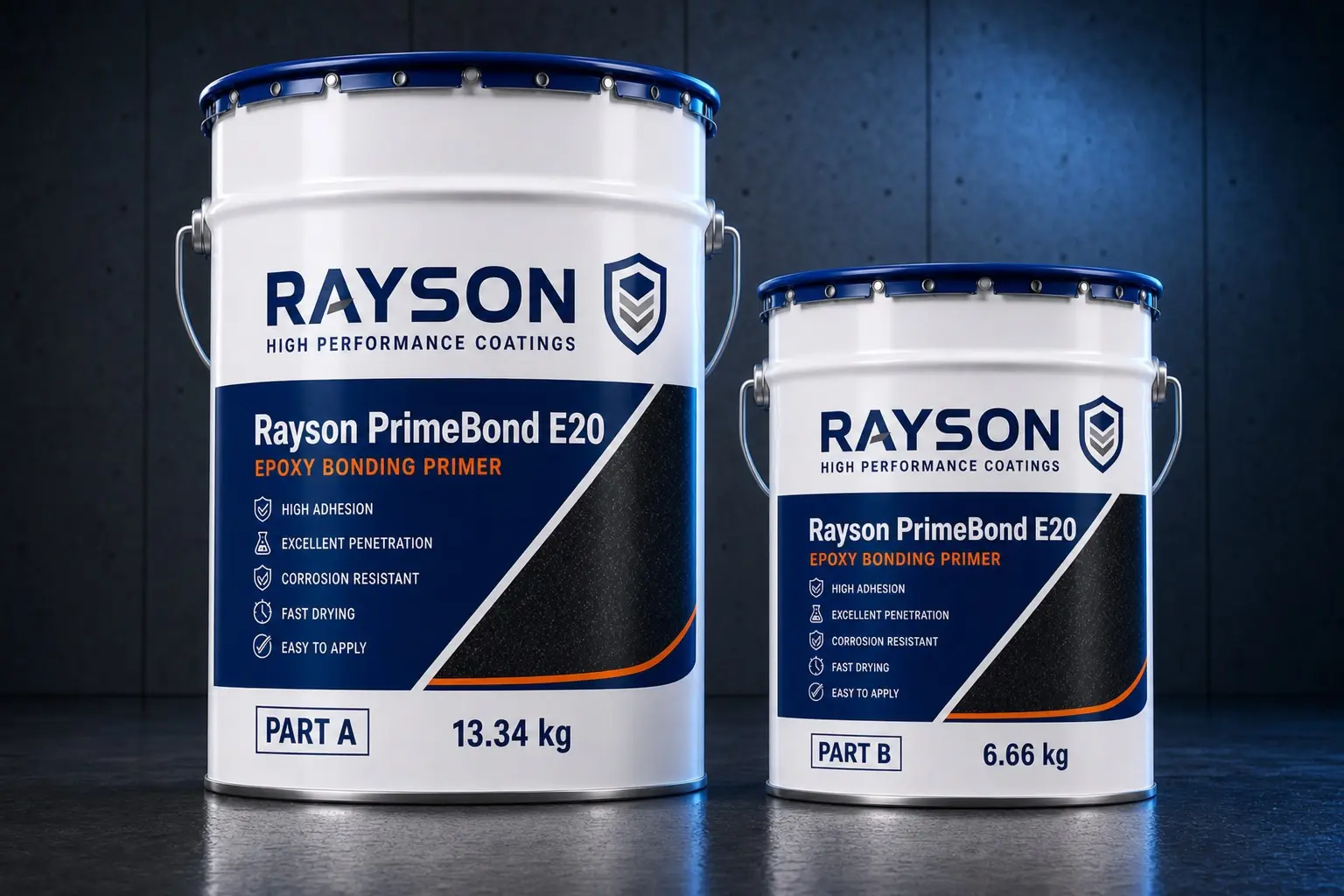
Rayson PrimeBond E20 is a two-component, medium-viscosity, solvent-free epoxy bonding primer that anchors resin floor systems to concrete, screed, asphalt and prepared metal — on dry or damp substrates.
Rayson assistant
Answers from Rayson's own product information
Guidance only — confirm specifications with the Rayson technical team.